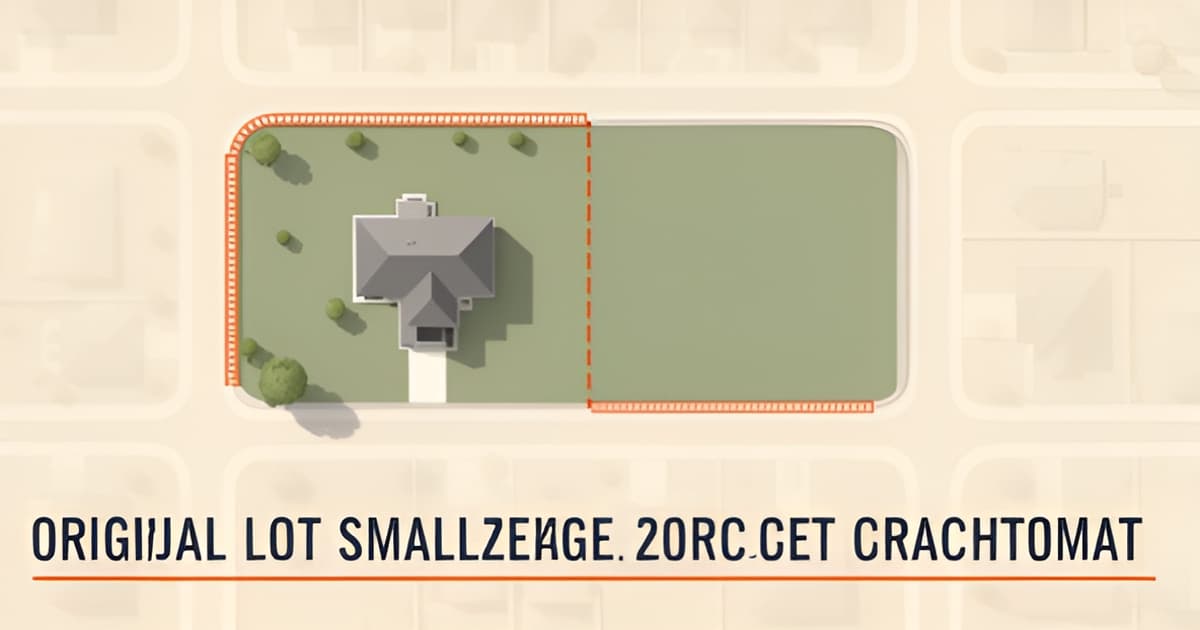
SB 9 Urban Lot Split in California: Requirements and Real-World Costs
Key Facts
- An SB 9 lot split in California typically costs $40,000–$70,000 before any construction begins.
- Lots must be single-family zoned, at least 2,400 square feet with a 60/40 to 50/50 split ratio.
- Violating SB 9's 3-year owner-occupancy affidavit can trigger a felony perjury conviction carrying up to four years in prison.
- Hiring a permit expediter for an SB 9 split can add up to $20,000 depending on scope and jurisdiction.
- Mortgage holders need a lender's partial release, generally requiring a low loan-to-value ratio and a mortgage at least one year old.
- High and very high fire severity zones can still qualify for SB 9 if certain building requirements are met.
- The most expensive SB 9 mistake is spending money in the wrong order, per engineering cost analysis.
Why Most Homeowners Get SB 9 Wrong: The Feasibility-First Problem
SB 9 promises a ministerial, by-right path to splitting your lot — no discretionary hearings, no neighbor veto. But the promise hides a trap: the eligibility screens are strict and multi-layered, and the most expensive mistake homeowners make isn't a fee or a survey. It's spending money in the wrong order.
The core problem is sequencing. As one engineering analysis of SB 9 costs puts it, "the most expensive version of an SB9 project is often the one where a homeowner spends money in the wrong order" — paying for design concepts or real estate strategy before confirming the parcel can actually split cleanly, that access and utilities work, and that lender and title issues are resolved.
That's a real risk because eligibility is far from automatic. Before a parcel can qualify for an urban lot split under Government Code § 66411.7, it must clear a stack of screens:
- Single-family zoning with a minimum lot size of 2,400 square feet, and a split ratio between 60/40 and 50/50
- A 15-year eviction lookback and a 3-year owner-occupancy commitment, backed by an affidavit
- Limits on demolishing or altering more than 25% of a current or former rental unit within the past 3 years
- Exclusion from coastal zones, fault zones, historic districts, wetlands, floodplains, and other protected areas
Two lots can both look eligible on paper yet carry wildly different price tags. Cost analysis shows the realistic planning range runs $40,000–$70,000 — and that figure covers only feasibility, survey, mapping, engineering, agency review, and recordation, not construction, major utility work, or grading. Cost usually reflects the amount of technical uncertainty that has to be resolved before the split can be relied on.
There's also a financing hurdle most homeowners never anticipate. If you have a mortgage, you'll need a partial release from your lender, which application guidance notes generally requires a low enough loan-to-value ratio and a mortgage at least one year old — with refinancing as the fallback if the release is denied.
For Altadena homeowners, the picture has one more layer. Properties in high and very high fire severity zones may still qualify for SB 9 if certain building requirements are met — a critical nuance in a community rebuilding after the Eaton Fire. And because Altadena sits in unincorporated LA County, local review standards and fees differ from neighboring cities, and no statewide source will tell you what your parcel specifically faces.
The right question, per the engineering guidance, isn't "what's the cheapest possible split?" It's whether the property creates enough value to justify the process. That's exactly why Altadena ADU Builder leads with a free feasibility consultation — including a cost-quiz concept render — so you confirm the parcel can split cleanly before committing a single dollar to design.
Can Your Lot Actually Split? The Eligibility Checklist
Before you dream about a second parcel, SB 9 runs your property through a stack of hard screens — and failing any one of them ends the process. The good news: most checks are knowable before you spend serious money.
The baseline screens start with zoning and size. Your lot must sit in a single-family residential zone and be at least 2,400 square feet, and the resulting parcels must fall between a 60/40 and 50/50 split ratio, according to a step-by-step guide to the SB 9 application process.
Then come the tenancy and occupancy rules. SB 9 is designed as a homeowner program, not an investor play, and the state enforces that intent aggressively:
- No tenant evicted in the past 15 years — an eviction lookback that disqualifies the property outright.
- You can't demolish or alter more than 25% of a current or former rental unit, rent-controlled unit, or low-income rental housing within the last 3 years.
- The owner must sign an owner-occupancy affidavit committing to live on one of the parcels for 3 years — violating it can trigger a felony perjury conviction carrying up to four years in prison.
- No short-term or vacation rentals on either parcel; units must rent for a minimum of 30 days.
Location screens matter just as much. Properties in wetlands, floodplains and floodways, conservation areas, protected species habitat, hazardous waste sites, coastal zones, earthquake fault zones, prime farmland, and historic districts don't qualify, per an analysis of SB 9's occupancy rules.
Here's the nuance that matters most in Altadena: high and very high fire severity zones can still qualify if the project meets certain building requirements. That's directly relevant to homeowners rebuilding after the Eaton Fire or holding property near the foothills — a fire-zone designation alone isn't a dead end, but it adds building-standard conditions you'll need to confirm parcel by parcel.
Two practical caveats before you get attached to the idea. First, mortgage holders need a partial release from their lender, which generally requires a low enough loan-to-value ratio and a mortgage at least one year old. Second, local rules effectively override the statewide framework — each agency applies its own objective standards and fees, and Altadena's status as unincorporated LA County means City of Los Angeles procedures don't transfer directly.
At Altadena ADU Builder, we tell homeowners the same thing engineers do: the most expensive version of an SB 9 project is the one where you spend money in the wrong order. A free feasibility consultation — with a cost-quiz concept render — is the cheapest way to find out whether your lot clears these screens before you commit to surveying, mapping, or design work.
What an SB 9 Lot Split Really Costs: $40,000–$70,000, and What That Doesn't Include
The sticker shock is real: an SB 9 lot split in California typically runs $40,000 to $70,000 before a single foundation is poured, according to planning-level cost analysis from an engineering firm that handles these projects. That figure covers the subdivision work only — feasibility studies, survey, mapping, engineering, agency review, and recordation.
Cleaner, simpler properties tend to land near the $40,000 lower bound, while more involved full-service projects typically fall in the $60,000–$70,000 band. As that same engineering analysis puts it, there is no single flat SB 9 price — cost usually reflects the amount of technical uncertainty that must be resolved before the split can be relied on.
What drives a project toward the top of that range? Site conditions matter most. Slope, drainage issues, access constraints, easements, and irregular lot shapes all add survey and engineering work. Existing improvements, deed or title complications, and local review standards can push costs higher still. And if you hire a permit expediter, that alone can add up to $20,000 depending on project scope and jurisdiction, per lot split process guidance.
Be clear about what that $40,000–$70,000 does not include:
- Construction of the new residence or ADU on either parcel
- Major utility extensions or unusual grading and remediation
- Lender and title work, legal fees, taxes, and financing costs
Then there is the financing hurdle most homeowners never see coming. If your property carries a mortgage, splitting the parcel requires a partial release of mortgage from your lender. Qualifying for that release generally requires a low enough loan-to-value ratio and a mortgage at least one year old, according to application guidance — with refinancing as the fallback if the lender denies the release.
This is why sequencing matters. The most expensive version of an SB 9 project, engineers caution, is often the one where a homeowner spends money in the wrong order — paying for design concepts before confirming the parcel can split cleanly, access works, and lender issues are resolved. The better question isn't just what the cheapest split costs, but whether the property can create enough value to justify the process.
For Altadena homeowners weighing a split alongside an ADU or rebuild, Altadena ADU Builder offers a free feasibility consultation to help you understand your parcel's realistic path — including a cost-quiz concept render — before you commit to the full subdivision process.
Owner Occupancy Rules and Local Overrides: What Altadena Homeowners Must Know
SB 9 was written for homeowners, not investors — and the state backs that intent with real teeth. Before any lot split application moves forward in Altadena, you'll sign an owner-occupancy affidavit committing to live on the property as your primary residence for three years. Violating that affidavit isn't a slap on the wrist: it can result in a felony perjury conviction carrying a prison sentence of up to four years, according to SB 9 occupancy guidance.
The rental rules reinforce the same homeowner-first framing. Units on a split lot must be rented for a minimum of 30 days — no short-term or vacation rentals allowed. Cities may not pile on additional owner-occupancy requirements beyond what the state mandates, though they can add rental and affordability requirements through local ordinance, per the same analysis.
Here's the part that catches Altadena homeowners off guard: the statewide framework is only the floor. Even with ministerial approval under state law, every parcel must satisfy local objective standards, parcel map requirements, and access requirements — and each agency sets its own fees, review process, and standards, as an engineering firm's cost analysis explains. What applies in the City of Los Angeles, where lot splits route through City Planning while two-unit developments go to LADBS, may not apply identically in unincorporated territory.
That distinction matters more in Altadena than almost anywhere else in LA County. Altadena sits in unincorporated LA County — not an incorporated city — so the County's Department of Regional Planning, not a city planning department, would govern your lot split. And here's the honest caveat: none of the published sources we reviewed provides Altadena-specific or LA County unincorporated fee schedules, timelines, or ordinance details. Commercial lot-split tools and engineering firms cover the state framework well, but parcel-level specifics for your street simply aren't documented publicly.
What that means practically:
- County fees — parcel map, impact, park, and recordation fees — must be confirmed directly with LA County; no source publishes dollar figures.
- Local objective standards (setbacks, access, fire requirements) can change what's buildable on each new parcel.
- High and very high fire severity zones may still qualify for SB 9 if certain building requirements are met — relevant given Altadena's wildfire-prone terrain.
- Timelines vary widely; published guidance suggests a few weeks to a few months for approval, but that's not a promise for any specific parcel.
The takeaway: treat statewide SB 9 rules as your eligibility screen, and treat Altadena's local rules as the real gatekeeper. Because no permit or timeline can be guaranteed from published data alone, parcel-level verification is essential — which is exactly why Altadena ADU Builder starts every engagement with a free feasibility consultation, including a cost-quiz concept render, before you commit money to surveys, maps, or county fees. Featured builder JMB Builders LLC (CSLB #1103479) brings local rebuild experience to that early evaluation.
Your Next Step: Sequence the Process Right Before You Spend
The most expensive version of an SB 9 lot split is often the one where a homeowner spends money in the wrong order, according to engineering analysis of SB 9 costs. Sequencing is your cost-control lever, and it starts with the free screens before you pay for anything.
Begin with the eligibility questions that cost nothing to answer. Your lot must be zoned single-family, measure at least 2,400 square feet, and split at a 60/40 to 50/50 ratio. Confirm there has been no eviction in the past 15 years, that you can commit to three years of owner occupancy, and that the property doesn't sit in an excluded zone like a coastal zone, fault zone, or historic district. One nuance matters locally: high and very high fire severity zones may still qualify if certain building requirements are met — relevant for many Altadena parcels near wildfire-prone terrain.
Next, resolve the money and title issues before commissioning any surveys. If you have a mortgage, you'll need a partial release from your lender, which typically requires a low enough loan-to-value ratio and a mortgage at least one year old. A lender that won't release may force a refinance, and deed or title problems discovered late can stall the entire process.
Only then move to paid technical work, in this order:
- Survey and mapping — the Preliminary Parcel Map prepared by a licensed surveyor or civil engineer
- Engineering review of slope, drainage, access, and utility feasibility
- Agency submission, including the lot split application, owner occupancy affidavit, and any required soils or tree reports
- Design — only after the split itself is on solid ground
Budget realistically: planning-level costs in California typically run $40,000 to $70,000, covering feasibility, survey, mapping, engineering, agency review, and recordation — but not construction, major utility extensions, lender and title work, or legal fees. Approval timelines range from a few weeks to a few months, though each agency sets its own fees and review standards, and LA County unincorporated specifics for Altadena require parcel-level verification.
Finally, apply the value test. The right question isn't what the cheapest split costs — it's whether your property creates enough value to justify the process. A second legal parcel gives you options to build, sell, rent, or hold, and if those options don't pencil out for your lot, the split isn't worth pursuing regardless of price.
If you're weighing a lot split alongside an ADU in Altadena, Altadena ADU Builder offers a free feasibility consultation with a cost-quiz concept render. You can also discuss construction with JMB Builders LLC (CSLB #1103479), Altadena's local licensed builder for custom homes, ADUs, and Eaton Fire rebuilds.
Frequently Asked Questions
How much does an SB 9 lot split actually cost in California?
Can I do an SB 9 lot split if my Altadena property is in a high fire severity zone?
What are the basic eligibility requirements for an SB 9 urban lot split?
Do I really have to live on the property for 3 years after an SB 9 split?
I have a mortgage on my property — does that block an SB 9 lot split?
What's the most expensive mistake homeowners make with SB 9?
Split Smart: Why the Order of Operations Decides Your SB 9 Outcome
SB 9 offers Altadena homeowners a rare, by-right path to a second legal parcel — but the rules are strict, and the costs are real. Expect a planning-level range of $40,000–$70,000 for feasibility, survey, mapping, engineering, agency review, and recordation, with construction, major utility work, and lender or title costs on top, per engineering cost analysis. Eligibility screens — 2,400-square-foot minimums, split ratios, the 15-year eviction lookback, the 3-year owner-occupancy affidavit, and protected-zone exclusions — can end the process before it starts, though high and very high fire severity zones may still qualify under certain building requirements. And because Altadena sits in unincorporated LA County, local fees and standards require parcel-level confirmation. The single biggest cost-control lever is sequencing: confirm eligibility, lender, and title issues before paying for surveys or design. Before you spend a dollar, take Altadena ADU Builder up on a free feasibility consultation — including a cost-quiz concept render — to see whether your lot can split cleanly and whether the value pencils out.