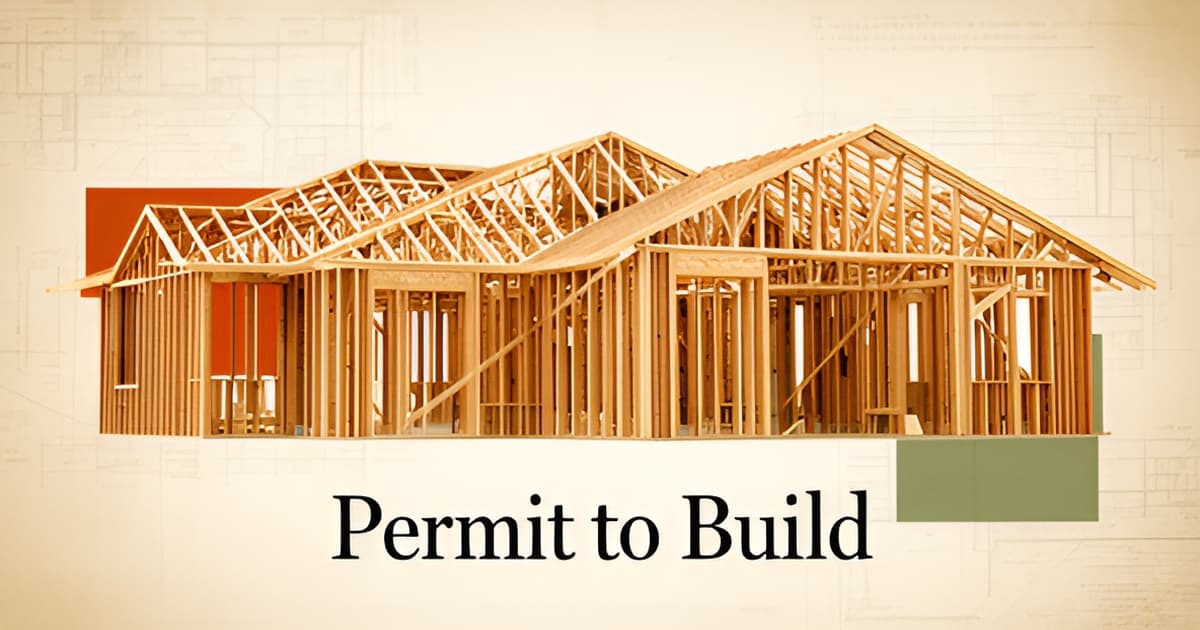
New Home Construction in Altadena: Permit to Framing
Key Facts
- Altadena has never had its own city government — every rebuild permit routes through LA County, never LADBS, per permit expediting analysis.
- Like-for-like rebuilds get a first review within 10 business days and 5-day rechecks, per LA County's official rebuild roadmap.
- Qualifying fast-track rebuilds may grow floor area up to 10% or 200 square feet, whichever is greater, per LA County's rebuild roadmap.
- Rebuilds with footprint, height, or use changes can take 10–20 weeks versus 2–6 weeks for complete like-for-like submittals, per practitioner timelines.
- Industry estimates put a full traditional Altadena rebuild at 2–2.5 years, per design-build benchmarks.
- California law caps contractor down payments at 10% or $1,000, whichever is less, per community rebuild guidance.
- A senior county inspector described the department as 'woefully understaffed,' warning 'passed does not mean protected,' per community reporting.
The Altadena Permit Puzzle: LA County, Not LADBS
Before you sketch a single wall, know this: Altadena has never had its own city government, and every new home permit routes through LA County Public Works Building and Safety and Regional Planning — never LADBS. That single jurisdictional fact shapes your entire project, from which building code your plans must satisfy to which counter your corrections get routed back through.
The most expensive mistake we see at Altadena ADU Builder is homeowners who prepare plans against City of LA codes, only to discover the plan set must be reworked for the County's Title 26 Building Code and Title 22 Zoning Code. As one permit expediting guide puts it, jurisdiction is "the single most consequential piece of information" for an Altadena build. A plan drawn for the wrong agency isn't just delayed — it may need a full resubmittal.
The good news is that the County has built real post-Eaton Fire infrastructure. The Altadena One-Stop Permit Center at 464 W. Woodbury Road co-locates Planning, Public Works, Public Health, Fire, SoCalGas, and SCE representatives under one roof, with free virtual appointments and rebuild consultations three mornings a week. In August 2025, the County launched the Unified Permit to collapse multiple applications into one, and an AI-assisted plan review pilot is now in place.
Honest timelines look like this:
- Like-for-like rebuilds: first review within 10 business days, with 5-business-day rechecks — as little as 2–6 weeks with a complete plan set.
- Rebuilds with changes: typically 10–20 weeks, because any footprint, height, or use change triggers full Regional Planning conformance review.
- Full traditional rebuild: industry estimates put the whole project at 2–2.5 years, start to finish.
Two caveats keep those numbers honest. First, the County's fast-track targets are review timelines only — "a signed proposal without permit, inspection and payment milestones is not a complete schedule," as one real estate analysis warns. Second, the like-for-like fast track has strict limits: qualifying rebuilds can increase floor area by no more than 10% or 200 square feet, whichever is greater, and they skip current zoning conformance but must still meet Building, Fire, and Health/Safety Codes.
Even a well-prepared plan set can stall on parcel-specific gates. Debris removal must be complete before a building permit is issued, foundation reuse requires testing by a qualified design professional, and utility readiness varies address by address. The determining factor in how fast your submittal moves isn't the office it walks into — it's whether the plans arrive complete and code-conforming on the first pass.
Before a Permit Is Issued: The Three Parcel-Specific Gates
Before your plans ever reach a plan checker, three parcel-specific gates determine whether a permit can actually be issued — and each one trips up homeowners who assume the paperwork is the hard part.
The first gate is debris removal. LA County allows you to submit plans while cleanup is still pending, but a building permit will not be issued until debris clearance is complete on your lot, according to rebuild reporting on the Altadena recovery. Because cleanup timelines vary by parcel, waiting on clearance can quietly become the critical path of your entire project.
The second gate is foundation verification. If you intend to reuse any existing foundation, a qualified design professional must perform testing or forensic analysis confirming it meets current code. And if debris removal disturbed soil deeper than 12 inches, a compaction report may be required before the foundation can be approved. Given that EPA-recommended remediation in fire areas involves a six-inch lot-line-to-lot-line scrape with a clean soil cap of two feet or more, many Altadena lots will cross that 12-inch threshold.
The third gate is utility readiness, which varies address by address. Before a permit can be issued, you need clarity on:
- Septic or sewer condition and connection requirements for your parcel
- A water Will-Serve letter from your provider
- Southern California Edison power availability on your street
None of these can be resolved at the permit counter alone — the One-Stop Permit Center co-locates SoCalGas and SCE representatives precisely because utility coordination is parcel-specific.
The good news: staying within like-for-like parameters keeps you on the fast track. Qualifying rebuilds can increase floor area, size, height, or footprint by up to 10% or 200 square feet, whichever is greater, and those applications receive a first review within 10 business days, with 5-business-day rechecks, per LA County's official rebuild roadmap. Cross those tolerances, however, and any change to footprint, height, or use triggers a full Regional Planning conformance review that takes materially longer — rebuilds with changes can run 10 to 20 weeks versus as little as 2 to 6 weeks for a complete like-for-like submittal.
Beware of false shortcuts here. Some contractors will suggest starting foundation work or utility connections before these gates clear, but community reporting warns that critical early work — compaction, grading, foundation readiness — is moving forward with insufficient oversight, and problems buried underground today become expensive disputes later. A signed proposal without permit, inspection, and payment milestones is not a complete schedule.
At Altadena ADU Builder, our free feasibility consultation with a cost-quiz concept render helps you map these prerequisites before you commit — and if you're evaluating builders, JMB Builders LLC (CSLB #1103479), an Altadena-based licensed general contractor whose Eaton Fire rebuild work is documented on jmb-builders.com, is a featured option worth comparing.
From Approved Plans to Framing: The County's Six-Step Roadmap and Inspection Sequence
Once your plans clear plan check, the County's own rebuild roadmap takes over — and knowing its shape is the difference between a project that moves and one that stalls. LA County lays out a six-step sequence for fire-affected parcels: debris removal, prepare plans, permit application, permit process, construct and inspect, then move in (https://recovery.lacounty.gov/road/start-your-permit-application/).
Debris removal comes first for a reason. Cleanup must be complete before a building permit can actually issue, even though you can submit plans while the lot is still being cleared. Foundation reuse adds another gate: it requires testing by a qualified design professional, and if removal disturbed soil deeper than 12 inches, expect a compaction report (https://www.lametrohomefinder.com/blog/altadena-rebuild-surge-2025-2027).
The permit process itself runs on two tracks. Like-for-like rebuilds — no more than a 10% or 200-square-foot increase, whichever is greater — get a first review within 10 business days and rechecks within 5. Changes to footprint, height, or use trigger full Regional Planning conformance review, which takes materially longer (https://recovery.lacounty.gov/road/start-your-permit-application/).
Once permits are in hand, construction unfolds through the County's inspection sequence. Each phase must pass before the next begins, culminating in a Certificate of Occupancy (https://www.oceanpermits.com/blog/la-county-unincorporated-building-permit-process):
- Foundation — verifying compaction, footings, and reinforcement before concrete sets the project's trajectory
- Framing — the structural skeleton, inspected before any walls close up
- Rough electrical, plumbing, and mechanical
- Insulation, then drywall
- Final inspection and Certificate of Occupancy
Framing deserves special attention here. It's the milestone where your build becomes physically real — and where the research thins out. No available source details framing durations, crew sizes, or materials on the ground; framing appears only as an inspection checkpoint. Treat any builder's framing timeline as an estimate, not a schedule.
Two more cautions matter. The Title 24 Wildland-Urban Interface code took effect at the start of 2026 for fire-affected areas, shaping what your exterior envelope must achieve (https://www.letterfour.com/blog/how-long-does-it-take-to-build-a-custom-modular-home-in-altadena). And the County's 10-day review targets are just that — review targets, not end-to-end construction schedules. Industry benchmarks put a full traditional rebuild at 2–2.5 years, and one community source estimates 7–10 years for the neighborhood-wide recovery (https://www.lametrohomefinder.com/blog/altadena-rebuild-surge-2025-2027).
Community reporting also flags inspection-oversight strain, with one senior county inspector describing pressure to "be lenient and let things move forward" — a reason to photograph every phase before it gets covered, and to choose a builder who documents their own work (https://beautifulaltadena.substack.com/p/guide-rebuilding-altadena). Altadena ADU Builder helps homeowners navigate exactly these Altadena-specific realities; if you're weighing a rebuild or an ADU on your parcel, a free feasibility consultation can map where your lot stands in the six-step sequence.
Who Builds It Matters: Contractor Vetting and the Oversight Reality
The contractor you sign with matters as much as the plans you submit — and in Altadena's post-fire rebuild surge, the wrong choice can be buried behind drywall before you ever notice. Community reporting on the rebuild warns that the contractor shortage has opened the door to out-of-area operators and outright bad actors, making vetting the single most important pre-construction decision a homeowner makes.
Start with the license. California issues a B (General Building Contractor) license for ground-up construction, while a B-2 (Remodeling) license does not authorize a full rebuild — yet some homeowners have hired B-2 holders for exactly that work, as documented in a community rebuild guide. Verify the license number directly on the CSLB website before signing anything.
Beware the owner-builder permit trap. Pulling an owner-builder permit may look like a way to save money or speed things up, but it transfers liability for subcontractor management, site safety, and code compliance from the contractor to you — the homeowner. That is a burden few owners are equipped to carry on a ground-up rebuild.
Know your payment protections. California law caps contractor down payments at 10% or $1,000, whichever is less, and any proposal you sign should include permit, inspection, and payment milestones — a signed proposal without them is not a complete schedule, per rebuild market reporting.
Oversight has limits, too. A senior county inspector, speaking off the record, described the department as "woefully understaffed" and acknowledged an unspoken expectation to be lenient so projects keep moving. Community advocates summarize the risk in four words: "passed does not mean protected." Critical work — compaction, grading, foundation readiness, drainage — may move forward with insufficient scrutiny, and self-certification is cited as a loophole.
That makes your own documentation essential. Photograph every phase before it gets covered:
- Soil condition and grading after debris removal
- Compaction work, especially if soil was disturbed deeper than 12 inches
- Foundation formwork, reinforcement, and the pour itself
- Framing — every wall, connection, and header
- Rough electrical, plumbing, and mechanical before insulation and drywall close it in
Finally, resist the pull of the lowest number. As the community guide puts it, "the cheapest bid can become the most expensive decision of the entire rebuild" — cut-rate work hidden inside walls surfaces years later as repair bills, disputes, and insurance headaches.
At Altadena ADU Builder, we help homeowners evaluate builder credentials as part of a free feasibility consultation, and our featured builder, JMB Builders LLC (CSLB #1103479), holds the B general contractor license required for ground-up rebuilds. Verify any license yourself — including ours — before you commit.
Your Permit-to-Framing Action Plan
The gap between a signed contract and a standing frame is where Altadena rebuilds are won or lost. The County's own six-step rebuild roadmap is straightforward on paper, but each step has parcel-specific gates that determine whether your project actually moves.
Start by booking a free Rebuild Consultation at the One-Stop Permit Center at 464 W Woodbury Road, where Planning, Public Works, Fire, SoCalGas, and SCE representatives sit under one roof. Appointments run Monday, Wednesday, and Friday from 8:30 AM to 12:30 PM, and virtual sessions are free. One conversation there can surface debris clearance status, foundation testing requirements, and utility readiness before they stall you months later.
Next, invest in a complete, code-conforming plan set. Practitioner analysis of the One-Stop process is blunt: the determining factor in review speed is whether plans arrive complete and code-conforming on the first pass. A like-for-like rebuild gets a first review within 10 business days and 5-business-day rechecks, while rebuilds with changes can take 10–20 weeks. Remember that Altadena is unincorporated LA County — plans drawn against City of LA codes will need rework.
Vet your contractor before signing anything. Ground-up rebuilds require a B (General Building Contractor) license; a B-2 (Remodeling) license does not authorize them. Verify license class and standing directly through CSLB records, and confirm the contractor's license number matches the name on the proposal — JMB Builders LLC (CSLB #1103479), featured on this site as a paid placement, is one example of a properly documented Altadena general contractor.
Finally, demand structure in your contract:
- Permit milestones tied to actual submittal and issuance dates
- Inspection milestones for foundation, framing, rough trades, insulation, and final
- Payment schedule capped at a 10% or $1,000 down payment, per California law
- Documentation of each phase — soil, compaction, foundation, framing — photographed before it's covered
As one local real estate analysis puts it, a signed proposal without permit, inspection, and payment milestones is not a complete schedule. And beware the owner-builder permit trap, which transfers liability for subcontractor management and site safety onto you.
If an ADU is part of your plan, Altadena ADU Builder offers a free feasibility consultation with a cost-quiz concept render. One honest note: no one can guarantee permit timelines or outcomes — anyone who does should be a red flag.
Frequently Asked Questions
Do I need permits from LADBS to rebuild a home in Altadena?
How long does it take to get a rebuild permit in Altadena?
What counts as a like-for-like rebuild, and why does it matter?
Can I reuse my old foundation after the Eaton Fire?
What should I look for when hiring a contractor for an Altadena rebuild?
What happens at each construction inspection before framing and beyond?
From Permit Desk to Standing Frame: Your Altadena Rebuild, Done Right
Rebuilding in Altadena comes down to a handful of make-or-break facts: your permits route through LA County Public Works and Regional Planning — never LADBS — so plans drawn against City of LA codes will need rework. Your lot must clear three parcel-specific gates (debris removal, foundation verification, utility readiness) before any permit issues, and like-for-like rebuilds staying within the 10% or 200-square-foot tolerance get first reviews within 10 business days. Once construction begins, each inspection — foundation, framing, rough trades — must pass before the next, and with county oversight stretched thin, photographing every phase before it's covered is your best protection. Vet your contractor's B license through CSLB, cap your down payment at 10% or $1,000, and insist on permit, inspection, and payment milestones in writing. If you're mapping a rebuild or adding an ADU to your parcel, Altadena ADU Builder offers a free feasibility consultation with a cost-quiz concept render to help you see where your lot stands before you commit. No one can guarantee timelines — and anyone who does should be a red flag.