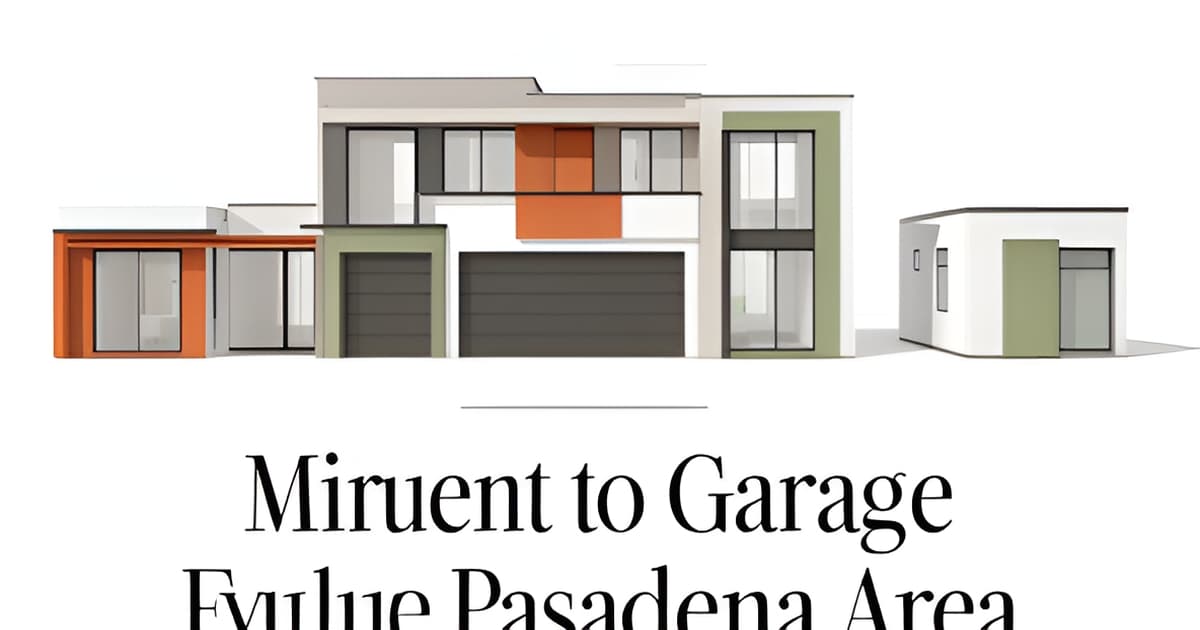
Multigenerational Home Remodel: Adding In-Law Suites in the Pasadena Area
Key Facts
- Multigenerational households bought 17% of homes last year — an all-time high — per NAR research.
- Cost savings now drives 36% of multigenerational living decisions, more than doubling from 15% in 2015, according to NAR data.
- Roughly 60 million Americans now live in multigenerational housing — four times as many as in 1971, per Pew Research cited by the LA Times.
- In LA County, garage conversions start around $85,000 while detached ADUs run $140,000–$280,000, per real project benchmarks.
- Permitting a detached ADU alone can take 2–6 months in ADU-heavy cities before construction begins, per detailed cost analysis.
- One documented garage conversion budget grew from $58,000 to $74,300 — over 28% — after required upgrades surfaced, per a documented case study.
- A 550-square-foot South Pasadena garage-to-ADU conversion cost roughly $250,000 and would cost twice as much today, per the LA Times.
Why Pasadena Families Are Building In-Law Suites Now
Across the country, families are moving back in together at a pace not seen in modern record-keeping. Last year, multigenerational households bought 17% of homes purchased — an all-time high — and roughly 60 million Americans now live in multigenerational housing, four times as many as in 1971.
The reasons behind the shift are practical, not sentimental. Cost savings is now the top driver, cited by 36% of multigenerational households in 2024 — up from just 15% in 2015. Close behind are the caretaking realities: among older millennial buyers, 35% purchased a home because of health or caretaking responsibilities for aging parents, and another 32% wanted to spend more time with them.
For homeowners in Altadena and Pasadena, the pattern looks familiar. The typical arrangement is a family owning the primary dwelling while an ADU provides nearby-but-autonomous space for an aging parent or a boomerang kid — close enough for shared dinners, far enough for privacy. One builder in the field estimates that about 70% of his ADU work is for multigenerational families, often young couples building so parents can move close.
The local challenge is choosing the right vehicle for that space, because the decision can swing the budget by as much as $150,000. A garage conversion in LA County typically starts around $85,000, while a detached ADU starts at $140,000 and can run to $280,000 or more once design, permits, and construction are included, according to LA-area project benchmarks. Detached units also carry a slower path: permitting alone can take 2 to 6 months in ADU-heavy cities.
The tradeoffs usually come down to a few factors:
- Cost and speed — conversions leverage existing walls, foundation, and utilities, making them faster and cheaper to build.
- Privacy and flexibility — detached units offer maximum independence and can later serve as a guest house or rental.
- Site and zoning constraints — setbacks, size limits, and historic-district rules (as seen in a documented South Pasadena garage-to-ADU conversion that cost roughly $250,000) can reshape both design and budget.
- Hidden costs — practitioners warn these add 10–20% to budgets, and one documented garage conversion grew from $58,000 to $74,300 after required upgrades.
California homeowners have the right to build at least two ADUs on their property, but — as the South Pasadena project's architect put it — an ADU "is still a house," and families can invest heavily only to discover permit qualification problems or required upgrades. That is why verifying feasibility before committing matters. At Altadena ADU Builder, our free ADU feasibility consultation includes a cost-quiz concept render so you can see what your property can support before spending a dollar on drawings. For those ready to move forward, featured builder JMB Builders LLC (CSLB #1103479) is an Altadena-based licensed general contractor building custom ADUs and whole-home remodels, including Eaton Fire rebuilds.
Garage Conversion vs. Attached Suite vs. Detached ADU: The Real Cost and Timeline Tradeoff
Most families assume a detached backyard cottage is the default in-law suite — until they see the price tag and the permitting timeline. In LA County, the gap between the cheapest and most expensive path can exceed $150,000, and the choice you make shapes everything downstream.
Based on real LA project benchmarks, garage conversion ADUs typically run $85,000–$140,000, attached ADUs $110,000–$200,000, and detached ADUs $140,000–$280,000. Detached units also face the longest regulatory road: permitting alone can take 2–6 months in ADU-heavy cities, before a single shovel hits the ground.
The honest case for each path:
- Garage conversion — fastest and cheapest, leveraging existing walls, slab, and utilities, but limited by the existing footprint.
- Detached ADU — wins on privacy, design flexibility, and long-term property value, but costs the most and takes the longest.
- Attached ADU — the emerging middle path, sharing foundation and utilities while giving family members genuine separation.
Experts split in telling ways. One LA contractor argues detached units are better when long-term value and privacy matter most, while another cautions bluntly: "I do not like them when the homeowner is trying to solve a short-term family housing need on a tight timeline." That tension explains why 2025 design trends favor attached "pods" and integrated ADUs — families want closeness and independence without the cost and zoning friction of a standalone structure.
The South Pasadena case study shows how complicated even the "cheap" path can get. A 550-square-foot garage conversion for a grandmother — completed in October 2021 — came in at roughly $250,000, and its architects estimated it would cost twice as much today. Because the home sat in a historic district, the ADU was required to look like a garage from the street, preserving the Tudor façade.
The project's architect, Ian Read, offered a warning every Pasadena-area family should heed: "An ADU seems like it's a lot less than a house, but it's still a house... You can invest a lot of money in a project and find out you don't qualify for permits." That risk is exactly why Altadena ADU Builder offers a free ADU feasibility consultation — to confirm your parcel qualifies before you spend on design.
Designing for Privacy, Aging in Place, and Three-Way Flexibility
The difference between shared living that works and shared living that breeds resentment often comes down to decisions made on paper before construction starts. Families designing in-law suites in 2025 are treating privacy and accessibility as foundational elements, not optional upgrades — and the most successful projects build in three-way flexibility from day one.
Start with the physical design. Dual primary suites have moved from special-circumstance feature to foundational element in multigenerational remodels, according to residential design trend research. The typical in-law pod includes a separate entrance or private foyer, a bedroom with attached bath, a dedicated living area, and sound-buffering walls with pocket doors. Circulation matters just as much: bedroom wings at opposite ends of the house and sightline-blocking offsets let generations pass through shared space without constant unwanted encounters.
Then there's the kitchen question — one that's both emotional and legal. When Bonnie Dalton's mother-in-law described what makes multigenerational living comfortable, her answer was blunt: "Two Kitchens, Please!" A kitchenette runs $7,500–$22,000 versus $20,000–$55,000 for a full kitchen, per detailed cost analysis. But the choice carries regulatory weight: some cities define a separate dwelling by its cooking facilities, which can trigger ADU rules and change how your suite is classified.
Aging-in-place features deserve the same day-one treatment. Ground-level, zero-step living is "now considered a core design principle—not an optional upgrade," with first-floor suites, wider hallways, and curbless showers leading the list. The financial logic is compelling: accessibility upgrades built in during construction add $4,000–$15,000 to the budget, while retrofitting the same features later costs far more. At Altadena ADU Builder, we flag these items during feasibility reviews precisely because they're cheap now and expensive later.
The strongest strategic recommendation from the research: build a suite that works three ways.
- Family housing today — a comfortable, autonomous space for an aging parent or boomerang adult child
- Guest space later — flexible quarters that adapt as family needs evolve
- Legal rental if allowed — income potential where local rules permit, with the kitchenette-vs-full-kitchen question determining whether the suite counts as a separate dwelling
This three-way framing matters because family needs shift. Roughly 70% of one builder's ADU work serves multigenerational families, often young couples building for parents to move nearby — but those same suites frequently outlive their original purpose. Designing for that evolution protects both your budget and your options.
Budgeting for Hidden Costs and Verifying Feasibility Before You Commit
Every in-law suite budget has a number you didn't plan for. Industry cost guides consistently warn that hidden costs add 10–20% to a remodel budget, and conversion projects in particular carry unforeseen expenses that owners of existing garages and basements often discover mid-construction.
The documented examples are instructive. One garage conversion budgeted at $58,000 ultimately cost $74,300 after an electrical panel upgrade, slab leveling and insulation, and required fire-rated drywall pushed the total up by more than 28%. Common hidden line items include:
- Utility upgrades: $3,000–$18,000 for panel, service, or gas capacity
- Fire separation: $2,000–$12,000 between the suite and main house
- Soundproofing: $1,500–$8,000, best built into plans rather than added later
- Site drainage: $2,500–$15,000 depending on grading and runoff
- Temporary housing during construction: $2,000–$10,000+
Bathrooms and kitchens are where budgets balloon fastest, because they require licensed trades. As one cost guide puts it, moving a bathroom across the house can cost more than upgrading every finish in the bedroom — a full bathroom runs $15,000–$35,000, and a kitchenette adds $7,500–$22,000. Accessibility upgrades add $4,000–$15,000 when built in during construction, but retrofitting them later costs more.
Altadena homeowners face an additional wrinkle: generic online cost guides can't substitute for a site-specific feasibility check. Altadena sits in unincorporated LA County, where hillside zones, county-level review, and post-Eaton Fire considerations all shape what's buildable on a given lot — and at what cost. Architect Ian Read, speaking about the well-documented South Pasadena ADU project, put the risk plainly: you can invest a lot of money and find out you don't qualify for permits, or that required upgrades will cost far more than expected.
That's why the smart sequence is feasibility first, commitment second. At Altadena ADU Builder, our free ADU feasibility consultation includes a cost-quiz concept render so you can see what a suite could look like on your specific property before signing anything. Readers who want to move forward with construction can consider JMB Builders LLC (CSLB #1103479), an Altadena-based licensed general contractor whose custom home, ADU, and Eaton Fire rebuild work is documented at jmb-builders.com; this is a disclosed paid placement.
One caveat applies throughout: no permit or timeline outcomes are guaranteed. The right first step is verifying what your lot, your utilities, and your budget can actually support — before you commit.
Frequently Asked Questions
How much does it cost to add an in-law suite in the Pasadena area compared to a detached ADU?
How long does it take to get permits for an in-law suite or ADU near Pasadena?
What hidden costs should I budget for when building an in-law suite?
Should I include a kitchen or just a kitchenette in my in-law suite?
Is it worth adding aging-in-place features if my parent doesn't need them yet?
Can I really get burned on permits after I've already spent money on plans?
Build Once, Design for Every Chapter
Adding an in-law suite in the Pasadena area is less about picking a structure and more about picking the right path for your property, your budget, and your family's next decade. The numbers make the stakes clear: garage conversions start around $85,000 while detached ADUs can reach $280,000 or more, hidden costs can add 10–20% to any budget, and permitting alone for a detached unit can take 2–6 months. The smartest projects we see share three traits: they verify feasibility before spending on drawings, they build aging-in-place features in from day one when they're cheapest, and they design a suite that works three ways — family housing now, guest space later, rental income if local rules allow. For Altadena homeowners, that verification step matters even more, given county-level review, hillside zones, and post-Eaton Fire considerations that generic cost guides can't capture. That's exactly why Altadena ADU Builder offers a free ADU feasibility consultation with a cost-quiz concept render — so you can see what your specific lot can support before committing a dollar. And if you're ready to build, consider JMB Builders LLC (CSLB #1103479), an Altadena-based licensed general contractor whose custom ADU and whole-home remodel work, including Eaton Fire rebuilds, is documented at jmb-builders.com. No permit or timeline outcomes are guaranteed — but knowing what your property can actually support is the first step toward a suite your whole family will thank you for.