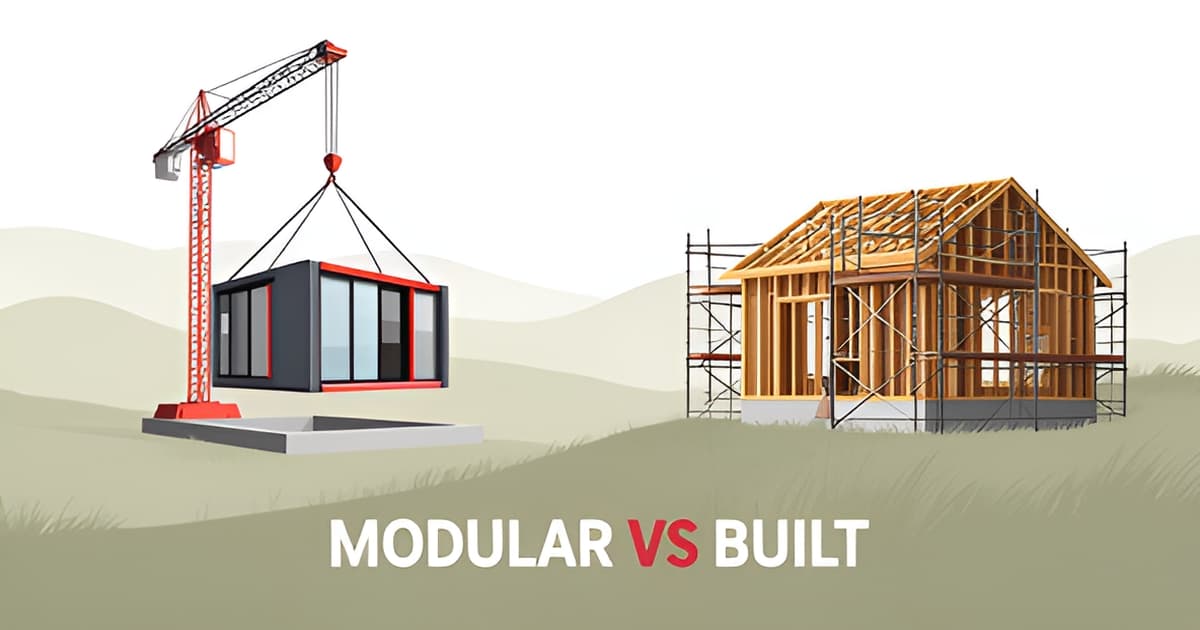
Modular ADU vs Site Built: Cost and Timeline Tradeoffs
Key Facts
- Modular ADU savings claims range from 10–30% depending on the source — a spread so wide it signals marketing, not math according to industry comparisons.
- A documented California case study saw a 590 sq ft ADU hit $327,756 against a ~$250,000 target — roughly a $78,000 cost overrun.
- One ADU marketplace that has watched projects close says prefab's overlooked costs bring the final total to about the same as a custom build per Maxable.
- A Sacramento builder with 250+ ADU projects says modular construction offers a bigger advantage in timeline than in final price.
- Custom site-built ADUs average roughly 10 city inspections, while prefab units are mostly inspected at the factory.
- Pre-approved ADU plans cut permit review to roughly 30 days and save 30–60 days versus custom plans per California permit research.
- California law requires ADU permit decisions within 60 days, yet real-world timelines range from 3 to 12 months according to drafting guidance.
The Cheaper-Sticker-Price Trap: What Modular Quotes Leave Out
The glossy catalog shows a number that looks $100,000 cheaper than a custom build — and that gap is where most Altadena homeowners get misled. Modular vendors advertise savings of 15–30% versus stick-built construction, but those figures come with fine print that can erase the entire discount.
The savings claims themselves don't even agree. One modular ADU vendor claims 15–30% savings, a Sacramento builder estimates 15–25% initially, and a California drafting firm puts the range at 10–20%. When three sources quoting the same industry can't land within ten points of each other, treat the percentages as marketing, not math.
What the catalog price actually covers is the house that leaves the factory — nothing more. Prefab base prices exclude the costs that apply to every lot regardless of build method:
- Transportation and crane installation, which rise sharply for lots off standard factory delivery routes
- Site prep, foundations, and utility connections
- Permit fees, which are based on unit size and jurisdiction — prefabs get no discount
- Planning costs and city fee allowances
A real benchmark shows how wide the gap gets. One manufactured-ADU vendor lists home-only prices from $123,000 (440 sq ft) to $170,000 (1,173 sq ft) — yet its own all-in estimate, including foundation, utilities, $9,500 in planning, and a $20,000 city-fee allowance, starts in the mid-$200,000s.
The most sober assessment comes from an ADU marketplace that has watched these projects close: prefab base prices look low, but the overlooked costs bring the final total to "about the same as a custom built ADU." Site prep, permits, and materials cost similar amounts either way.
That doesn't make modular a bad choice — it makes it a schedule choice, not a price choice. The builder with 250+ ADU projects puts it plainly: modular's bigger advantage is timeline, not final price. Altadena ADU Builder encourages homeowners to compare written all-in quotes from both methods before assuming the sticker price tells the whole story, and a free feasibility consultation can map those numbers to your specific lot.
Where Modular Actually Wins: Timeline and Schedule Risk
If there's one thing the data agrees on, it's this: modular's real advantage isn't the sticker price — it's the calendar. As one Sacramento builder with 250+ ADU projects puts it, modular construction offers a bigger advantage in timeline than in final price.
The schedule savings come from three structural differences. Factory construction eliminates weather delays entirely, and site prep happens concurrently with the factory build — your foundation and utilities are underway while the unit itself is being assembled indoors. A volumetric modular unit can then be installed on a prepared foundation in just a day or two, with one manufactured ADU dealer reporting 2–4 months of on-site work after delivery, permitting excluded.
The inspection burden shrinks too. Custom site-built projects average roughly 10 city inspections, each requiring scheduling and potential re-inspection. Prefab units are mostly inspected at the factory — identical to previously approved units — leaving only a handful of on-site inspections during site prep and installation.
Then there's cost certainty. Modular's fixed-price contracts eliminate mid-project cost overruns, while stick-built costs are notoriously unpredictable. That's not an abstract concern: a documented California case study saw a 590 sq ft above-garage ADU reach a final bill of $327,756 against a ~$250,000 target, with the project spanning 12–13 months — a roughly $78,000 overshoot on contractor bids that already ranged $250k–$300k.
What drives that overrun risk on site-built projects?
- Homeowner change orders — the biggest single cause of ADU cost overruns, since finishes alone can account for up to 30% of total cost
- Weather exposure during open-wall construction, including material warping risks
- Labor shortages and material price fluctuations over a longer build window
- Each failed inspection adding scheduling delays to the critical path
Prefab's limited customization options are usually framed as a drawback, but they double as overrun protection: fewer decisions, fewer mid-project changes. One caveat worth noting — prefab companies face the same skilled-labor shortage as every other builder, so factory lead times can still stretch.
For Altadena homeowners weighing the two paths, the honest framing is this: modular buys you schedule certainty and price protection, while site-built buys you control — at documented risk of both. Whether a specific hillside or fire-zone lot supports either approach is exactly the kind of question Altadena ADU Builder addresses in a free feasibility consultation, since no published data covers LA County unincorporated timelines specifically.
What Site-Built Delivers: Customization, Finish Control, and Lot Fit
For all the talk of modular savings, site-built construction still holds one advantage nothing else can match: near-unlimited customization. Stick-built ADUs can be shaped to the lot, the primary residence, and the homeowner's taste in ways factory-built modules simply cannot, since modular designs are constrained by shipping dimensions and pre-set floor plans.
That flexibility matters in Altadena specifically. Between hillside lots, fire-zone sites, and high-end primary homes, many properties demand designs that a catalog unit can't accommodate. A stick-built ADU can match rooflines, materials, and finishes of a custom home — a real consideration when finishes alone account for up to 30% of ADU cost, and custom architectural design typically runs $8,000–$25,000 or more.
The tradeoff is risk. Site-built quality is highly dependent on the experience and reliability of local builders, and on-site weather exposure can warp materials or compromise structural elements. Custom builds also average roughly 10 city inspections, each requiring scheduling and the possibility of re-inspection, and homeowner change orders are widely cited as the biggest cause of ADU cost overruns.
Cost variance deserves honest framing, too. While detached site-built ADUs commonly run $200,000–$400,000+ in California, builders note that geography drives cost variance more than builder skill — meaning your lot and site conditions shape the final number more than the build method does. A documented California case study illustrates the overrun risk: a 590 sq ft above-garage ADU reached $327,756 against a ~$250,000 target, which is why a 10–15% contingency is standard advice.
Hillside and fire-zone conditions add another layer that modular marketing rarely mentions. Special site conditions can add 30–180+ days to permitting and construction timelines — a reality many Altadena properties face, especially in the Eaton Fire recovery area. In these contexts, the ability to engineer a foundation, grading, and fire-hardened detailing around the actual lot becomes less of a luxury and more of a necessity.
Key questions worth asking any site-built contractor:
- How many ADUs have you completed in unincorporated LA County, and can you share references?
- How will hillside grading, foundation, or fire-zone requirements affect my timeline and budget?
- What is your process for managing change orders and keeping finishes on budget?
- Is your license active, and who supervises the work day to day?
Because the answer depends so heavily on your specific lot, Altadena ADU Builder offers a free feasibility consultation with a cost-quiz concept render to help you compare modular and site-built options for your property. Featured builder JMB Builders LLC (CSLB #1103479) is an Altadena-based licensed general contractor with documented experience in custom homes, ADUs, and Eaton Fire rebuilds. No timeline or permit outcome can be guaranteed — but starting with a clear-eyed look at your site is the most reliable way to make the call.
Permits Are the Same Either Way — Except Pre-Approved Plans
Here's a surprise most homeowners miss: whether you build your ADU in a factory or on your lot, the permit office treats you exactly the same. Fees are calculated on unit size and jurisdiction — not construction method — and modular ADUs must satisfy the same zoning and building codes as traditional stick-built units, according to industry comparisons. As the ADU marketplace Maxable puts it, prefabs don't get charged less than custom ADUs.
What does change is your plan type. This is where the permit math actually shifts, and it's the single biggest lever you control regardless of which build method you choose.
Pre-approved and standard plans cut review time dramatically. Instead of plan checkers reviewing every architectural detail from scratch, they only evaluate site-specific factors — setbacks, utilities, foundation. In Los Angeles, custom plans typically take 75–120 days for plan review, while standard plans run 50–70 days, per California ADU permit timeline research. Statewide, pre-approved plans can reduce review to roughly 30 days and save 30–60 days compared to custom plans.
The savings extend beyond time into design costs:
- Stock or pre-approved plans typically run $3,000–$8,000, versus $12,000–$25,000 for custom architectural design
- Pre-approved plans or prefab templates can cut design costs by 30–50%
- Custom design often consumes 8–15% of your overall ADU budget
There's a catch worth understanding: even with a pre-approved prefab plan, you still submit a full building permit application. The plan's prior approval speeds up review — it doesn't skip it. Site-specific conditions like hillside terrain or fire zones (both relevant in Altadena) can add 30–180+ days to review regardless of plan type.
California's regulatory framework also applies equally to both methods. State law requires local agencies to approve or deny ADU permits within 60 days of submission, though real-world timelines range from 3 to 12 months. Starting January 1, 2026, SB 543 requires cities to determine application completeness within 15 business days — a change aimed at closing that gap.
Perhaps the most important insight for Altadena homeowners: submittal quality matters more than jurisdiction speed. A complete, well-prepared first submittal in a slower office often beats an incomplete one in a faster one, because each correction cycle adds 30–60 days. Best-case timelines (pre-approved plans, perfect submittal) run 8–12 weeks; poorly prepared applications can stretch to 32–52 weeks.
If you're weighing modular against site-built for a specific Altadena lot, the honest answer is that no general article can resolve it — site conditions and plan availability drive the outcome. Altadena ADU Builder offers a free ADU feasibility consultation with a cost-quiz concept render to help you compare both paths for your property. Featured builder JMB Builders LLC (CSLB #1103479), an Altadena-based licensed general contractor, can speak to what local plan review actually looks like in practice.
How to Decide for Your Lot: Budget a Contingency and Get Real Numbers
The sticker price you see first is almost never the number you'll pay. One manufactured ADU vendor lists three different starting prices on its own site, with catalog figures excluding site work, permitting, and fees — its own "all-in" estimate runs from the mid $200,000s (TheRenology's prefab ADU guide). That gap between brochure and reality is exactly where most comparison budgets fall apart.
Demand written, all-in quotes from any prefab vendor — foundation, transport, utility connections, permitting, and fees included. If a vendor won't itemize those, you're comparing their base price against a site builder's full scope, which isn't a comparison at all.
On the site-built side, budget for overruns before you're surprised by them. A documented California case study saw a 590 sq ft above-garage ADU reach $327,756 against a roughly $250,000 target — an overshoot of about $78,000 (Housing.info's real-build breakdown). Drafting guidance recommends a 10–15% contingency for unforeseen site conditions and material price changes (Andalusia Drafting's cost guide).
Then weigh your personal tradeoffs honestly:
- Schedule risk: modular's advantage is timeline, not final price — factory builds skip weather delays and most of the ~10 city inspections a custom build averages (Maxable; IMKAT Construction).
- Customization needs: stick-built offers near-unlimited flexibility, but every change order adds cost and time; prefab's fixed scope is a feature if you tend to splurge on finishes.
- Overrun tolerance: modular's fixed-price contracts cap mid-project surprises, while site-built totals are, as one source puts it, "unpredictable."
Finally, get a lot-specific comparison, not generic averages. Geography and site conditions drive cost variance more than builder skill, and hillside or fire-zone conditions can add 30–180+ days to permitting (Andalusia Drafting's timeline guide) — factors that matter enormously on an Altadena hillside lot. No published source provides LA County unincorporated fee schedules or head-to-head timelines for both methods in one market, so generic online numbers can't answer this for your property.
That's why Altadena ADU Builder offers a free ADU feasibility consultation with a cost-quiz concept render — the only reliable way to compare modular and site-built for your specific Altadena lot. We make no permit or timeline promises; we give you real numbers for your parcel so you can decide with data instead of vendor brochures.
Frequently Asked Questions
Is a modular ADU really cheaper than building one on site?
What costs does a modular ADU sticker price leave out?
How much faster is a modular ADU than a site-built one?
Do prefab ADUs get permits approved faster or cheaper?
How common are cost overruns on site-built ADUs?
My Altadena lot is on a hillside — does that change the modular vs. site-built math?
The Real Answer Lives on Your Lot, Not in a Brochure
The modular-versus-site-built debate comes down to one honest takeaway: modular wins on schedule certainty and price protection, not on final cost. The sticker price gap erodes once transport, site prep, permits, and fees enter the picture — one ADU marketplace that has watched these projects close puts the final totals at about the same as a custom built ADU. Site-built, meanwhile, buys you near-unlimited customization at documented overrun risk — a real California build overshot its target by roughly $78,000. Your next steps are concrete: demand written, all-in quotes from any prefab vendor, budget a 10–15% contingency for site-built work, and ask whether pre-approved plans could cut your permit review by 30–60 days. But because hillside terrain, fire-zone requirements, and LA County unincorporated review shape the outcome more than any national average, the decision ultimately hinges on your specific parcel. Altadena ADU Builder offers a free ADU feasibility consultation with a cost-quiz concept render to put real numbers on your lot — no guarantees, just the data you need to choose with confidence.