Home Inspections During Construction in Altadena: What Each Phase Checks
Key Facts
- Altadena ADU builds follow a strict eight-phase inspection sequence where each phase must pass before the next can legally begin, per ADU Center guidance.
- A pre-inspection walkthrough with your framing lead catches roughly 90% of framing issues before the inspector arrives, according to practitioner analysis.
- LA County inspection requests must be submitted at least 24 hours in advance through the EPIC-LA portal, per county rules.
- Most inspection failures stem from coordination breakdowns between trades, not corner-cutting, per industry analysis.
- A failed inspection 'hits the job twice' — direct correction costs plus remobilization and subcontractor rescheduling, according to Buildxact.
- Homeowner standby costs for inspections generally run $600 to $1,000 per inspection, per SPUR reporting.
- LA County's remote video inspections now handle 20–40% of eligible inspections, with ADUs included at inspector discretion, per SPUR.
Why Altadena Inspections Trip Up ADU Builds (and What They Cost You)
If you're building an ADU in Altadena, your inspection schedule isn't set by a city hall down the street — it's run by the LA County Department of Public Works Building and Safety Division, because Altadena is unincorporated LA County. Every request goes through the EPIC-LA online portal, and it must be submitted at least 24 hours in advance, during regular working hours only. Miss that window and your crew is standing around waiting.
The stakes are higher than most homeowners realize. The governing rule is simple but unforgiving: work must be inspected before it's covered. No drywall over uninspected framing, no concrete over unseen rebar, no backfill over uninspected utilities. And phases are strictly sequential — each one must pass before the next can legally begin, since no work may continue beyond a prior inspection point without the inspector's approval.
A typical California build requires a minimum of six to eight inspections, and ADUs often follow an eight-phase sequence that adds underground utilities and shear/sheathing checks. With that many gates, a single failure compounds fast. Industry analysis notes that a failed inspection "hits the job twice" — once through the direct cost of corrections, and again through remobilization, extra supervision, and rescheduling subcontractors who may already be booked on other sites.
Then there's the wait. Most jurisdictions charge a reinspection fee after a failure, and lead times in busy jurisdictions can stretch long — a Palo Alto audit found roughly two weeks between request and inspection. Homeowner standby costs generally run $600 to $1,000 per inspection, so every stalled phase has a real price tag.
The good news: failures are usually coordination problems, not corner-cutting, and they're preventable with discipline:
- Never cover any work until the inspector has seen and approved it — the cardinal ADU rule.
- Run a pre-inspection walkthrough with your framing lead; a pre-walk can catch roughly 90% of framing issues before the inspector arrives.
- Keep current, stamped plans on site so documentation mismatches don't trigger an automatic correction notice.
- Schedule the 24-hour advance request around your crew's actual readiness, not optimism.
One more wrinkle for Altadena homeowners rebuilding after the Eaton Fire: LA County now offers remote video inspections for eligible scopes — 20 to 40% of eligible inspections — with ADUs included at inspector discretion. County officials treat RVIs as equivalent inspections, not a reduced standard.
At Altadena ADU Builder, we walk homeowners through this sequencing before construction starts, because problems caught at rough inspection are orders of magnitude cheaper to fix than problems caught at final. If you want a realistic picture of what your ADU's inspection path looks like — and what it costs — our free feasibility consultation includes a cost-quiz concept render, and our featured builder, JMB Builders LLC (CSLB #1103479), brings local experience with ADUs and fire rebuilds.
The Phase-by-Phase Inspection Sequence: From Underground Utilities to Final Sign-Off
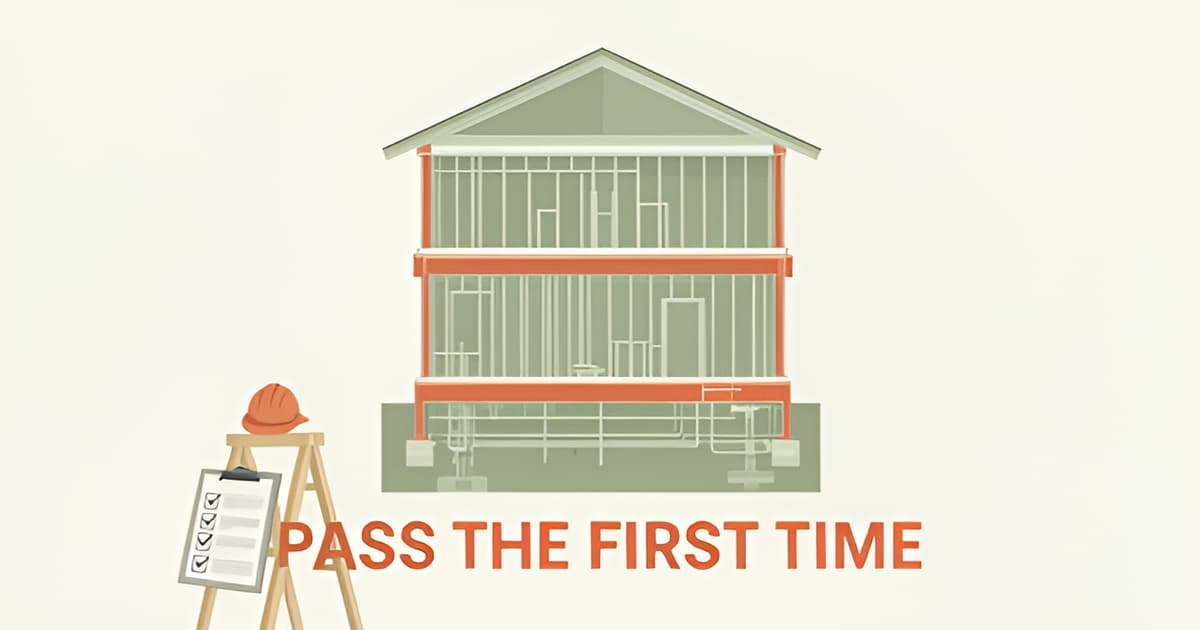
An ADU in Altadena isn't inspected once — it's inspected in a strict sequence, and each phase must pass before the next can legally begin. LA County is explicit that no work may continue past a required inspection without the inspector's approval, and every visit ends with one of three outcomes: a correction list, approval to continue, or final sign-off, per LA County Public Works.
For a typical California custom home, builders plan for a minimum of six to eight required inspections, often more, according to industry phase-inspection research. ADU builds follow a similar eight-phase rhythm, and each phase checks something specific — and something you can't fix later.
- Underground utilities: sewer, water, gas, and electric lines are verified in the trench — before any backfill covers them.
- Foundation/pre-pour: with forms set and rebar in place, the inspector checks footing dimensions, reinforcement size and spacing, anchor bolts, hold-downs, and setbacks against the plans and geotechnical/soils report.
- Rough-ins: plumbing is checked for drain slope, support, and vents; electrical for wire sizing, box fill, and staples; HVAC for duct routing and sealing.
- Shear and sheathing: plywood type, nailing patterns, clips, straps, and hold-downs — scrutinized closely under California's seismic requirements.
- Insulation and close-in: Title 24 R-values and air sealing at penetrations, electrical boxes, and attic hatches get more scrutiny than they did a decade ago.
The critical gate is pre-drywall. As one pre-drywall inspection guide puts it, once the drywall goes up, that access is forever lost — and if a required inspection is skipped, the authority can require reopening the area. Problems caught at rough inspection are orders of magnitude cheaper to fix than problems caught at final.
The sequence ends at the building final, where inspectors focus on life-safety items: smoke and CO alarms, handrails, guards, and egress. Passing final yields the Certificate of Occupancy — without it, the ADU can't legally be occupied, and lenders often won't release the final construction draw.
Most failures aren't corner-cutting; they're coordination. Common rough-in failures include missing nail plates, unsealed duct boots, and flat vents — and a practitioner analysis found a pre-walk with the framing lead catches roughly 90% of framing issues. At Altadena ADU Builder, we tell homeowners the same rule the ADU Center does: don't cover anything until the inspector has seen it. If you're weighing an ADU build, a free feasibility consultation with a cost-quiz concept render is a sensible first step — and JMB Builders LLC (CSLB #1103479), our featured builder, walks this inspection sequence on ADUs and Eaton Fire rebuilds throughout Altadena.
What Inspectors Fail Most Often — and Why It's Usually Coordination, Not Corner-Cutting
A failed inspection can feel like a verdict on your builder, but here's the truth: most failures trace back to a subcontractor who ran behind or a plan set that didn't match the field, not to someone hiding defects. As one industry analysis puts it, "most inspection failures aren't about cutting corners — they're about coordination."
A few honest caveats before the list: no one publishes Altadena-specific pass/fail data, and LA County doesn't release ranked failure statistics. What follows comes from national and regional practitioner data, so treat it as a pattern map, not a local scorecard.
The ten items inspectors flag most often:
- Documentation mismatches between approved plans and field conditions
- Framing errors that break the load path — wrong headers, missing blocking
- Electrical rough-in issues: missing staples, improper box fill, misapplied GFCI/AFCI protection
- HVAC ductwork errors — kinked or sagging flex duct, unsealed boots
- Plumbing vent and slope problems, unsupported pipe, missing fireblocking, blower-door failures, weatherproofing layering mistakes, and foundation/setback or life-safety items like smoke alarms and egress
California adds two hot spots to that list. Inspectors here scrutinize shear wall nailing patterns closely because of seismic requirements, and Title 24 air sealing at penetrations and electrical boxes gets far more attention than it did five or ten years ago. An ADU build in Altadena even gets a dedicated shear and sheathing inspection covering plywood type, nailing, clips, and hold-downs, per the ADU Center's phase breakdown.
Here's the good news: a failed inspection is normal and recoverable. The process is straightforward — a correction notice citing the code section, the fix, then a reinspection, usually with a fee attached. What matters, as practitioners note, is how quickly the issue gets identified, corrected, and reinspected.
The real cost is time, not rework. Inspectors in busy California jurisdictions book out days in advance — a Palo Alto audit found roughly two weeks between request and inspection. A failure "hits the job twice": the correction itself, plus remobilization and subcontractor rescheduling.
The cheapest fix happens before the inspector arrives. A pre-walk with the framing lead can catch 90% of framing inspection issues before they become correction notices. That's why Altadena ADU Builder emphasizes builder readiness over inspection luck — and why experienced local contractors like JMB Builders LLC, an Altadena-based licensed general contractor (CSLB #1103479), treat the pre-walk as standard practice, not a nice-to-have.
Pass-First Playbook: Pre-Walks, Documentation, and Altadena's Wildfire-Rebuild Context
Most inspection failures trace back to coordination, not corner-cutting — and that means a disciplined pre-walk routine can save you weeks of reinspection delays. As one failure-pattern analysis puts it, most failed inspections stem from breakdowns in communication between trades, not bad intentions.
Start with a framing pre-walk alongside the crew lead. Practitioners report this single habit catches roughly 90% of framing inspection issues before the inspector ever arrives, per the same analysis. Walk the load path, check headers and blocking, and confirm shear wall nailing matches the plans.
Before the pour, verify the survey and setbacks independently — foundation and setback errors rank among the most common failures, and concrete is unforgiving. Keep updated plans on site, install fireblocking early rather than as a last-minute scramble, and have HVAC crews mastic-seal ductwork so Title 24 sealing passes on the first attempt.
Your pre-inspection checklist should include:
- Framing pre-walk with the crew lead before calling for inspection
- Updated stamped plans on site, with engineering notes resolved
- Survey and setback verification before the foundation pour
- Mastic-sealed duct connections and early fireblocking
Altadena homeowners should know that LA County's remote video inspection program now handles 20–40% of eligible inspections, with ADUs eligible at inspector discretion. County officials treat RVIs as equivalent inspections, not a reduced standard — inspectors retain full authority to fail work or require on-site visits. SPUR has specifically recommended expanding remote inspections for Wildland Urban Interface code compliance, which speaks directly to Altadena's Eaton Fire rebuild context, where inspection backlogs can stretch lead times to roughly two weeks in busy jurisdictions.
One clarification matters: a county inspector verifies code compliance, not workmanship quality. For high-end custom builds, a third-party inspector can review materials and coordination beyond code scope, which California building experts recommend for large custom homes. In practice, your general contractor schedules and attends inspections unless you're an Owner Builder, per the ADU Center's guidance.
If you're weighing an ADU alongside a rebuild, Altadena ADU Builder offers a free feasibility consultation with a cost-quiz concept render — and for full rebuilds, JMB Builders LLC (CSLB #1103479), our featured builder, handles Eaton Fire reconstruction in Altadena.
Your Next Step: Map Your ADU's Inspection Path Before You Break Ground
Every inspection on your Altadena ADU is a checkpoint you can either pass on the first call or pay to repeat — and the difference usually comes down to who is running your job. A builder who pre-walks the framing with the crew can catch roughly 90% of framing inspection issues before the inspector ever arrives, according to practitioner analysis of common failures. That habit alone can save you weeks on a schedule where inspectors in busy jurisdictions may be booked out several days between request and visit (SPUR reporting on California inspection capacity).
The reason builder choice matters so much here is that most failures are coordination problems, not corner-cutting. A missed nail plate, an unsealed duct boot, or a flat plumbing vent typically means a correction notice, a reinspection fee, and a subcontractor rescheduled — a hit the job takes twice, once in direct correction cost and again in lost time. Ask any builder you interview how they prepare for each phase:
- Who attends inspections, and who requests them through the EPIC-LA portal at least 24 hours ahead?
- Do they run a pre-inspection walkthrough before each call, with updated plans on site?
- How do they handle correction notices — same-day fixes or a return trip?
- Do they have experience with LA County's remote video inspection option, which now covers 20–40% of eligible inspections?
Your builder's inspection discipline is your project's schedule insurance. The general contractor typically schedules and attends inspections, so this is one area where hiring well pays compound dividends across the entire eight-phase sequence.
If you're building in Altadena, one local option worth a look is JMB Builders LLC (CSLB #1103479), an Altadena-based licensed general contractor building custom homes, ADUs, and whole-home remodels, including Eaton Fire rebuilds — its work and service areas are documented on jmb-builders.com. Full disclosure: JMB Builders is a paid featured builder on Altadena ADU Builder, and that placement does not constitute an endorsement or a guarantee of outcomes.
And to be clear about what no one can promise: no builder, including any featured here, can guarantee permit approvals or inspection timelines. LA County sets its own schedules, and every project moves at the county's pace. What a good builder can do is show up ready for every inspection.
Start with a free ADU feasibility consultation from Altadena ADU Builder — take the quick cost quiz and get a concept render that shows what a backyard ADU could look like on your specific property. Real costs, real permits, real builders — mapped before you break ground.
Frequently Asked Questions
Who handles construction inspections for ADUs in Altadena, and how far in advance do I need to request one?
What happens if my ADU fails an inspection?
Why can't my crew just drywall over the framing to keep the schedule moving?
What do inspectors actually fail ADU builds on most often?
How can I make sure my ADU passes each inspection on the first try?
How many inspections will my Altadena ADU actually need?
Inspect Once, Pass Once: The Discipline That Keeps Your ADU on Schedule
Building an ADU in Altadena means navigating eight sequential inspections through LA County's EPIC-LA portal, and the rule that governs everything is simple: work gets inspected before it's covered. Most failures aren't corner-cutting — they're coordination problems like missing nail plates or unsealed duct boots, and a pre-walk with your framing lead can catch roughly 90% of framing issues before the inspector arrives. Since a single failed inspection can cost you both correction fees and weeks of subcontractor rescheduling in a county where inspectors book out days ahead, your builder's readiness matters more than luck. Before you break ground, ask any builder you interview how they prepare for each phase and who attends inspections. No builder can guarantee county timelines — but a disciplined one shows up ready every time. Altadena ADU Builder's free feasibility consultation gives you a realistic picture of your inspection path, with a cost-quiz concept render showing what an ADU could look like on your property. Real costs, real permits, real builders — mapped before you start.