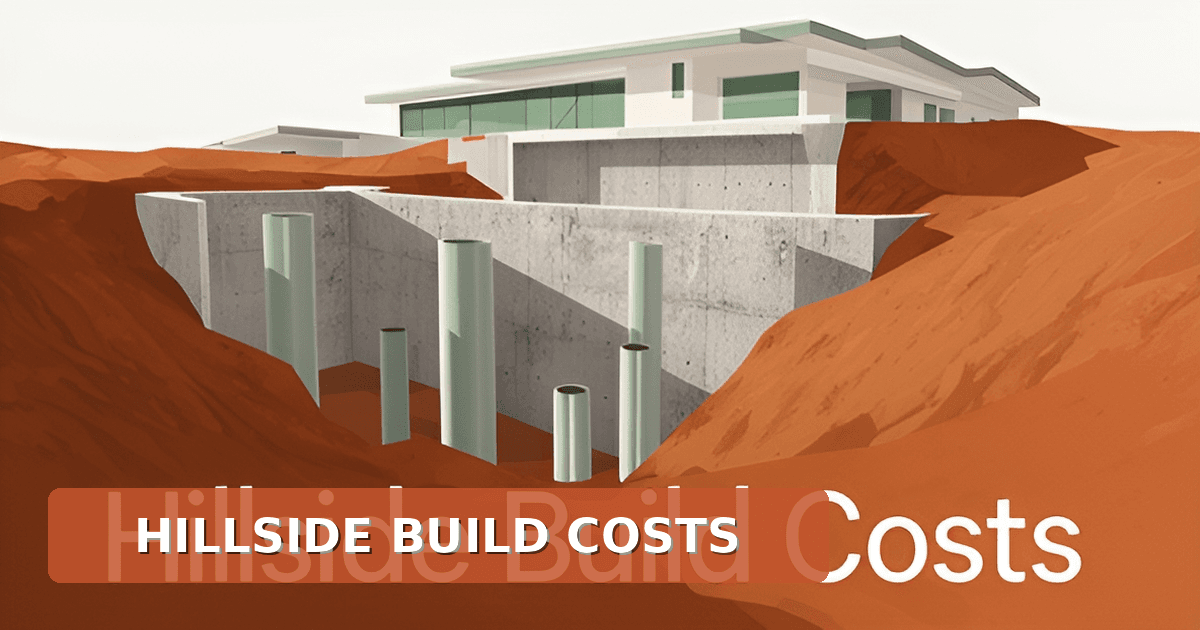
Hillside Home Construction in Los Angeles: Basements and Buttress Costs
Key Facts
- Hillside homes in LA cost 20–50% more than flat-lot builds, with the premium hidden below grade.
- Caissons run $15,000–$50,000 per pier at depths of 15–40 feet, often the single largest hillside cost.
- A house needing a $120,000 flat-lot foundation can require a $400,000+ caisson system on a slope.
- One Palos Verdes bid comparison showed a $380,000 spread-footing bid versus the correct $840,000 caisson bid — a $460,000 error.
- Steep hillside geotechnical investigations cost $20,000–$25,000+ with six borings to 60+ feet plus slope stability analysis.
- Post-wildfire rebuilding demand has added a 5–10% cost premium through 2026–2027, with geotech engineers booked 6–12 months out.
- Grading permits trigger at 100+ cubic yards of earth movement or any cut/fill slope exceeding 5 feet.
The Hidden Below-Grade Premium: Why Hillside Builds Cost 20–50% More
Ask two LA builders to price the same hillside home and you may get numbers $300,000 apart — and the more expensive bid is often the correct one. That's because hillside construction in Los Angeles carries a 20–50% cost premium over equivalent flat-lot builds, and nearly all of that premium lives underground, in caissons, retaining walls, grading, and drainage that will be invisible once the home is finished.
The numbers tell the story. Practitioner estimates place flat-lot custom homes at $500–$800 per square foot, while hillside builds run $650–$1,200 per square foot, with steep or difficult lots reaching $1,000–$1,800 for custom work. On a slope, the foundation system alone can represent as much as 25% of total hard cost, and on some projects, site preparation costs as much as building the house itself.
Why the gap is so wide comes down to what the ground demands:
- Caissons — frequently the single largest added cost, running $15,000–$50,000 per pier at depths of 15–40 feet, with total caisson scope ranging from $75,000 for a modest home to $600,000+ for complex estates
- Retaining walls — engineered structural systems with deep footings, steel reinforcement, and waterproofing that can exceed $100,000
- Grading and drainage — $50,000–$200,000+ depending on how much earth must move and how far it must be hauled
- Difficult access — narrow roads and limited staging inflate costs across nearly every trade through smaller equipment, more trips, and crane requirements
The comparison between flat lots and slopes is stark. A house that needs a roughly $120,000 foundation on flat ground may require a $400,000+ caisson-and-grade-beam system on a slope. In one Pacific Palisades example, spread footings came in around $900,000 on a steep hillside — before shoring — versus roughly $80,000 for comparable Westside flat-lot footings.
Perhaps the most important lesson for buyers: two lots with identical views and identical square footage can differ by hundreds of thousands of dollars based entirely on soil, slope, and access. The difference between a $150,000 foundation and a $1.2 million foundation, as one contractor principal put it, is almost entirely in the ground, not the structure above it. That's why a geotechnical investigation — $20,000–$25,000+ on a steep hillside with six borings and slope stability analysis — is the most consequential early expenditure you can make.
For Altadena homeowners weighing a hillside build or an ADU on sloped terrain, we at Altadena ADU Builder recommend treating below-grade work as separate budget line items rather than a vague "site work" allowance, and carrying a 15% contingency. A free ADU feasibility consultation, including a cost-quiz concept render, can help you understand what your specific lot's subsurface conditions might mean for your budget — before those conditions surprise you mid-construction.
Caissons, Retaining Walls, and the Numbers That Break Hillside Budgets
The most expensive parts of a hillside home are the ones you'll never see. As one industry analysis puts it, the real cost of a hillside home is usually hidden below grade — and the gap between a flat-lot budget and a hillside budget lives almost entirely in three line items: caissons, retaining walls, and grading with drainage.
Start with caissons, the drilled concrete piers that anchor a hillside foundation to stable soil or bedrock. When a geotechnical investigation identifies unstable fill, expansive soils, or landslide potential, LADBS effectively requires them — and they're often the single largest added cost on the build. Practitioner estimates put caissons at $15,000–$50,000 per pier, drilled to depths of 15–40 feet, with total scope ranging from $75,000–$180,000 for a modest home (15–20 piers) to $250,000–$600,000+ for large, complex projects, per granular LA market data.
The flat-lot comparison makes the premium concrete. The same house that needs a roughly $120,000 foundation on flat ground may require a $400,000+ caisson-and-grade-beam system on a slope, according to hillside cost estimates. On a slope, the foundation alone can represent 25% of total hard cost.
The other big below-grade line items:
- Retaining walls — engineered structural systems, not landscaping, that can exceed $100,000 on their own.
- Grading and drainage — typically $50,000–$200,000+ depending on earth moved and hauling distance.
- Site access — drill rigs weigh 40,000+ pounds, and when they can't reach caisson locations, hand-digging or crane assistance adds substantial labor cost.
The cautionary tale here is a Palos Verdes bid comparison documented by Benson Construction Group: one contractor bid $380,000 using spread footings; the correct bid, based on the geotechnical report, was $840,000 with caissons to 30 feet. The first bid would have failed inspection — a $460,000 error caused by ignoring what the geotech report said.
One honest caveat: reliable published pricing for buttress walls and basement excavation on LA hillside lots simply doesn't exist in the available data. These systems are too site-specific to generalize, and any contractor quoting them without a geotechnical report in hand is guessing. At Altadena ADU Builder, we advise homeowners to treat these as per-project line items priced only after soils investigation — never from a blog template or a verbal estimate.
Permits, Geotech Reports, and the Eaton Fire Rebuild Factor
Altadena sits squarely inside the regulatory terrain that makes hillside building in Los Angeles so demanding. Before you sketch a floor plan or price a foundation, the Baseline Hillside Ordinance, grading rules, and fire-zone standards shape what you can build — and what it will cost.
Start with the dirt. A mandatory geotechnical investigation runs $8,000–$25,000+, with steep hillside sites at the high end requiring six borings to 60+ feet plus slope stability analysis. LADBS requires both a Geotechnical Engineer (GE) and a Certified Engineering Geologist (CEG) on hillside sites, and the geotech report must be approved before building permits are issued under LAMC Section 91.7006.2.
Grading triggers its own permit. According to LADBS requirements, any earth movement exceeding 100 cubic yards — or any cut/fill slope taller than 5 feet — requires a separate grading permit. Cut slopes are capped at 1:1, fill slopes at 2:1, and erosion controls must be in place before the October 15 rainy-season start date.
Fire-zone rules layer on top. Virtually all LA hillside land falls within a Very High Fire Hazard Severity Zone, triggering CBC Chapter 7A ignition-resistant construction standards plus automatic fire sprinklers.
- Geotech report: $8,000–$25,000+, depending on slope and boring depth
- Grading permit: required at 100+ cubic yards or 5-foot cut/fill slopes
- Two licensed professionals: a GE and a CEG on every hillside site
- Fire standards: Chapter 7A materials and sprinklers, essentially everywhere in the hills
The Eaton Fire has reshaped this market. Post-wildfire rebuilding demand has added an estimated 5–10% cost premium through 2026–2027, with geotechnical engineers booked 6–12 months out. Emergency orders expedite plan check for fire rebuilds, but slope-stability grading and geotechnical review are generally not waived.
One caveat matters enormously for Altadena homeowners: fire rebuilds that expand beyond the pre-fire footprint trigger full Baseline Hillside Ordinance standards — a like-for-like rebuild and a bigger house are two very different regulatory paths, as permit expeditors note.
That makes early sequencing critical. Commission the geotech investigation first, verify Hillside Area status on ZIMAS before designing, and work with a builder who has genuine hillside and fire-rebuild experience — JMB Builders LLC, an Altadena-based licensed contractor (CSLB #1103479), is one local firm documenting Eaton Fire rebuild work. If you're weighing an ADU alongside a rebuild, Altadena ADU Builder offers a free feasibility consultation with a cost-quiz concept render to help you plan both under one geotech and permitting strategy.
Your Pre-Construction Playbook: Five Steps Before Breaking Ground
Every dollar you save by skipping hillside homework, you'll spend tenfold once the excavator arrives. Before you break ground on a slope — or sign a contract on an Altadena lot still recovering from the Eaton Fire — here is the playbook experienced builders follow.
Step 1: Verify Hillside Area status before designing anything. LADBS designation is map-based via ZIMAS, and practitioner guidance notes that many owners discover Hillside Area status unexpectedly. Slope density rules can cut buildable area by 45–60%+ on slopes over 30%, so run the full calculation before committing to a design.
Step 2: Commission a geotechnical investigation before finalizing your budget. This is the single most consequential pre-construction spend. A steep hillside investigation runs $20,000–$25,000+ with six borings to 60+ feet and slope stability analysis — and it's the only way to know your caisson count, since those numbers are never certain until the report is complete. In today's wildfire-recovery market, geotech engineers are booked 6–12 months out, so start early.
Step 3: Budget below-grade work as separate line items. A vague "site work" allowance is how hillside budgets collapse. Break out each component:
- Caissons: $75,000–$600,000+ depending on project size
- Retaining walls: can exceed $100,000
- Grading and drainage: $50,000–$200,000+ depending on earth moved and hauling distance
- Geotechnical investigation: $8,000–$25,000+
Step 4: Carry a 15% contingency and plan for a 24–36 month timeline. Hillside builders consistently recommend this buffer because hillsides hide surprises underground — conditions differing from the geotech report happen regularly and require real-time engineer observation. Remember that erosion control must be in place before LADBS's October 15 rainy-season start.
Step 5: Hire a builder with genuine hillside experience. As one contractor puts it, "this is not the project for a first-timer." Early mistakes become dramatically more expensive once grading and engineering are underway, and coordination among architects, soils consultants, and hillside-experienced builders must start before the first shovel. Fire rebuilds that expand beyond the pre-fire footprint also trigger full Baseline Hillside Ordinance standards — directly relevant to Altadena homeowners.
For Altadena residents weighing an ADU or rebuild on sloped ground, Altadena ADU Builder offers a free ADU feasibility consultation with a cost-quiz concept render. JMB Builders LLC (CSLB #1103479), an Altadena-based contractor featured on this site and actively handling Eaton Fire rebuilds, is one local option worth that first conversation.
Frequently Asked Questions
How much more does it cost to build a house on a hillside lot in Los Angeles compared to a flat lot?
What do caissons actually cost on an LA hillside foundation?
Is a geotechnical report really necessary before I budget a hillside build?
Can two identical hillside lots really differ by hundreds of thousands of dollars in build cost?
Has the Eaton Fire made hillside rebuilding in Altadena more expensive?
What's the biggest mistake homeowners make when budgeting a hillside ADU or home?
Build on What You Know — Before the Ground Decides for You
The most expensive parts of a hillside home are the ones you'll never see. As we've seen, the 20–50% hillside premium lives almost entirely below grade — in caissons that can run $75,000 to $600,000+, retaining walls that exceed $100,000, and grading and drainage that adds another $50,000–$200,000+ — while foundation systems on LA hillside lots range from $150,000 to over $1.5 million. The Palos Verdes bid gap — $380,000 versus the correct $840,000 — shows what happens when the geotech report is ignored. Your next steps are clear: verify Hillside Area status on ZIMAS, commission the geotechnical investigation before finalizing any budget, break below-grade work into separate line items, and carry a 15% contingency across a 24–36 month timeline. For Altadena homeowners weighing a hillside build or an ADU on sloped ground — especially post-Eaton Fire — Altadena ADU Builder offers a free ADU feasibility consultation with a cost-quiz concept render, so you can understand what your lot's subsurface conditions mean for your budget before they surprise you mid-construction.