Gut Renovation Contractors: How to Pick a Team for a Full Remodel
Key Facts
- Gut renovations typically cost $100,000 to $300,000, versus $50,000 to $90,000 for cosmetic remodels, per NerdWallet's cost research.
- One documented gut remodel saw an $80,000 budget balloon to $115,000 after walls hid 1970s wiring, a cracked beam, and rotted subfloor, industry cost analysis shows.
- A bid 20–30% below the field usually signals missing scope, thin allowances, or cash-flow trouble, per Block Renovation's vetting guide.
- California's SB 779 raised minimum penalties for unlicensed contracting from $200 to $1,500 per violation — a 650% jump, construction litigation attorneys note.
- Budget at least 20% contingency for gut work — and 25–30% for pre-1980 homes, renovation cost experts recommend.
- Renovation timelines typically run 20–30% longer than contractor estimates, and one missed inspection slot takes about two weeks to rebook, industry guidance warns.
- A gut remodel can run 20% to 50% cheaper than a teardown rebuild — unless foundation or structural damage flips the math, according to NerdWallet.
Why Gut Renovations Are a Different Job Than a Remodel
Most homeowners use "remodel" and "gut renovation" interchangeably, and that confusion costs them five figures. The difference isn't finish quality — it's a fundamentally different project with fundamentally different risks.
A gut renovation strips a home to its studs and rebuilds the systems inside: plumbing, electrical, HVAC, and often the structure itself. According to NerdWallet, gutting a home to the studs typically runs $100,000 to $300,000, while industry cost analysis classifies full gut projects at $150,000 to $300,000-plus — versus $50,000 to $90,000 for cosmetic work. That's a six-figure gap between "refreshing surfaces" and "opening walls."
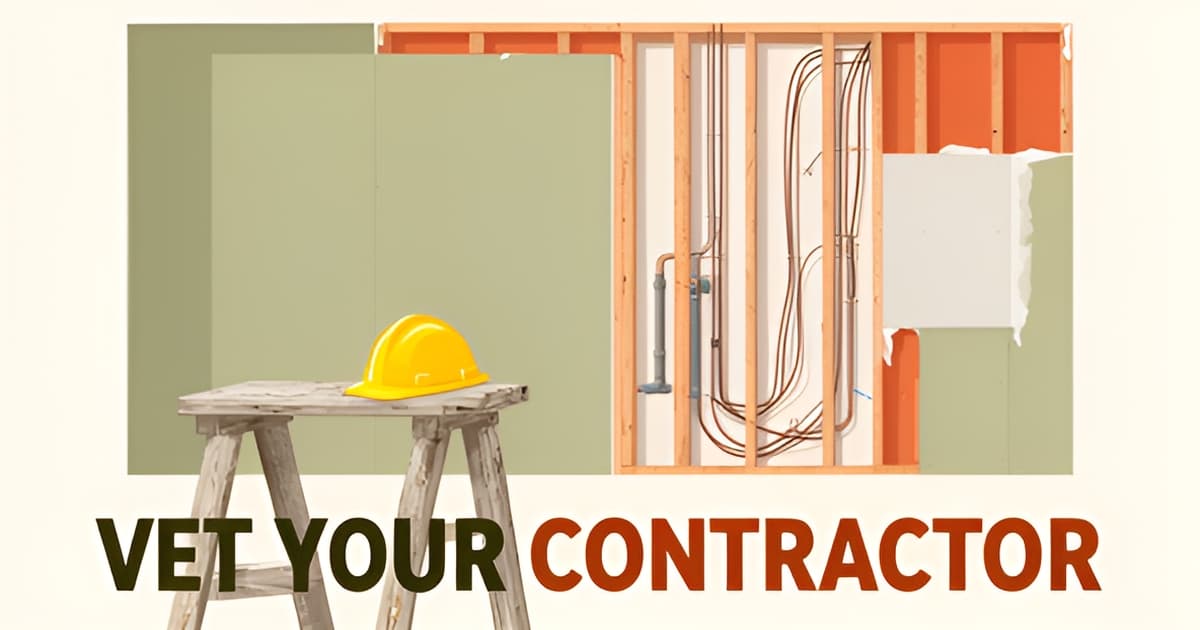
Here's what makes gut work categorically different: what's behind the walls. Contractors opening homes 20 or more years old routinely find knob-and-tube wiring, failed cast-iron plumbing, moisture-damaged subfloors, and non-code framing — none of which appeared in the original estimate. In one documented case, an $80,000 budget became $115,000 after demolition revealed 1970s wiring, a cracked beam, and rotted subfloor. As the analysis put it, "the house simply held things nobody could see."
This is why practitioner guidance on gut renovations argues the contractor's real job is risk management, not craftsmanship. Licenses, reviews, and three bids are table stakes. The differentiator is judgment when conditions change — because once demolition starts, "that contractor's judgment matters more than anything in their portfolio."
Gut work also demands coordination that cosmetic projects never touch:
- Interdependent trades — one plumber discovery can cascade into a month of delays, since missed inspection slots take roughly two weeks to rebook.
- Strict sequencing — structural and mechanical work must precede finishes, and most blown budgets include at least one rework event from doing things out of order.
- Pricing by trade, not by room, because the systems are interconnected.
Notably, the general contractor may never touch the physical work — subcontractors determine the quality you live with. In Altadena, where many homeowners are weighing full remodels alongside ADU projects and fire-related rebuilds, this distinction matters: a contractor's ability to manage hidden conditions, not just install beautiful finishes, is what protects a six-figure investment. Gut renovations may even be necessary after floods or fires for safety and structural soundness, adding another layer of risk a finish-level remodeler simply isn't equipped to manage.
The Discovery Problem: Budgeting for What You Can't See
The most expensive line in your gut renovation budget is the one nobody could see when the contract was signed. That's the defining financial risk of gut work — and the fastest way to separate contractors who manage risk from those who just install finishes.
When walls open in homes 20+ years old, contractors routinely find knob-and-tube wiring, failed cast iron plumbing, subfloor moisture damage, and non-code framing — none of which appeared in the original estimate, according to whole-home renovation cost analysis. Industry guidance echoes this: demolition surfaces corroded pipes, undersized joists, abandoned gas lines, and improvised wiring after pricing is locked.
The $80K-to-$115K case study illustrates the pattern. A homeowner budgeted $80,000 for a gut remodel; once walls opened, crews found 1970s knob-and-tube wiring, a cracked beam, and moisture-damaged subfloor. The project finished at $115,000. No one overspent frivolously — the house simply held things nobody could see.
This is why bid structure matters more than the headline number. A one-page "ballpark" estimate tells you nothing about what happens when discovery hits. Instead, demand a line-item quote and compare bids by their assumptions across five areas:
- Demolition scope — what exactly gets opened, and who pays when conditions differ
- Structural allowances — engineer's drawings should exist before pricing, not after
- Electrical and plumbing line items — is rewire priced in or assumed away?
- Allowances — a $4,000 tile allowance and a $12,000 one describe different projects
- Contingency handling — how change orders get documented and approved
Contingency guidance follows directly from home age. Budget 20% minimum, and 25–30% for pre-1980 homes — plus an extra 15% for hidden electrical and plumbing issues in older housing stock. As one remodeling editor puts it: "The 10% figure sounds responsible. On a home with original plumbing and wiring, it is not enough."
For Altadena homeowners — where many pre-1980 homes and fire-affected properties are entering major rebuilds — this discovery risk is especially live. If a contractor shows excessive certainty about what's behind your walls, treat that as a red flag. The right team tells you what they can't know yet, then shows you exactly how they'll price it when they find it.
The Vetting Checklist: Five Questions That Separate Gut-Capable Contractors
Licenses, portfolios, and three bids get every contractor through the front door. What separates gut-capable teams is judgment — because once demolition starts, "that contractor's judgment matters more than anything in their portfolio," according to renovation industry guidance on vetting for full remodels.
Ask about past failures first. Good contractors "talk about their failures easily" — what caused the problem, how they solved it, what they'd do differently. Blame-shifting in the interview predicts blame-shifting mid-project. A contractor with no stories of things going wrong hasn't done enough gut work.
Then probe the subcontractors. Your GC may never touch the physical work; subs determine the quality you live with. Ask how long core trades have worked with the GC and how many jobs they've completed together. "We'll bid it out once we're awarded" signals coordination problems later — and one missed inspection slot can take two weeks to rebook, turning a single plumbing discovery into a month of delays.
Compare bids by assumptions, not price. The same gut project can draw bids of $140,000, $185,000, and $240,000, and a bid 20–30% below the field usually means missing scope, thin allowances, or cash-flow trouble. As one vetting guide puts it, "the most expensive line in any bid is the one that was left out." A $4,000 tile allowance and a $12,000 one describe different projects.
For structural work, the correct answer to "how would you handle removing this load-bearing wall?" involves engineer's drawings before pricing. If you get a confident guess from a walkthrough, end the interview there.
Finally, test schedule track records. Ask how the final completion date on their last three projects compared to the contract date — timelines typically run 20–30% longer than contractor estimates, per whole-home renovation cost analysis.
In California, license verification is now higher-stakes. SB 779 raised minimum civil penalties for unlicensed activity from $200 to $1,500 per violation — a 650% increase — with construction litigation attorneys urging homeowners to confirm licenses are active and properly classified before signing. Get the CSLB license number and classification in writing, and verify it yourself. As consumer experts advise, don't take a contractor's word for it — get a copy before you sign.
For Altadena homeowners weighing a full remodel alongside an ADU, Altadena ADU Builder suggests running these five questions against every candidate — including local firms like JMB Builders LLC (CSLB #1103479), whose license status you can confirm directly with the CSLB. A free ADU feasibility consultation can help you pressure-test scope before you commit to either path.
Red Flags That Mean Walk Away
The most expensive line in any renovation bid, as one industry guide puts it, is the one that was left out. Gut renovations routinely run $100,000 to $300,000, according to NerdWallet's cost research, which makes the vetting stage the cheapest insurance you will ever buy.
Watch for these warning signs before signing anything:
- A bid 20–30% below the field — Block Renovation flags this as a sign of missing scope, thin allowances, or cash-flow problems. In one example bid spread, the same project drew quotes of $140,000, $185,000, and $240,000.
- A vague one-page estimate — line-item detail matters because a $4,000 tile allowance and a $12,000 tile allowance describe two different projects.
- Excessive certainty about what's behind the walls — nobody can know until demolition opens them.
- Pressure tactics, cash-only demands, or large upfront payments — Texas Legal notes big down payments may signal a contractor covering debts on other jobs.
- Blank "TBD" allowances — as Good Housekeeping's Dan DiClerico told KCRA, "an allowance is any blank space on a contract," and undecided details can leave you with a bill "actually $10,000 more than you thought."
The practical rule from Block Renovation's vetting guide: two or more red flags should end consideration entirely. A contractor who shows no stories of past problems, or who answers structural questions with a confident guess instead of engineer's drawings, is telling you exactly how the project will go once walls open.
California homeowners have added reason for caution. Under SB 779, minimum civil penalties for unlicensed contracting jumped from $200 to $1,500 per violation, and legal analysts note the heightened penalty environment makes verifying licensure before signing more important than ever. Get copies of the license and insurance — don't take the contractor's word for it.
If a contractor claims mid-project damage that demands an expensive on-the-spot repair decision, slow down. Ask to see the damage yourself, take photos, and consider a second opinion before approving anything. Hidden conditions are real — knob-and-tube wiring, cracked beams, and failed plumbing surface in homes 20+ years old — but a legitimate contractor will show you the evidence rather than pressure you.
At Altadena ADU Builder, we advise homeowners to treat the bid-comparison stage as an assumptions audit, not a price hunt. The cheapest number on the table is often the most expensive project you could buy.
Hiring in Altadena: Fire Rebuilds, Licensing, and Your Next Step
For Altadena homeowners, the gut-vs-teardown question is often not a choice at all. Gut renovations may be necessary after floods or fires for safety and structural soundness, and a gut remodel can run 20% to 50% less expensive than tearing down and rebuilding — though major foundation or structural damage can flip that math, according to NerdWallet's renovation cost analysis. In a community recovering from the Eaton Fire, many homes fall somewhere in between: structurally salvageable, but stripped to the studs and rebuilt from the framing out.
California's enforcement environment makes your first vetting step non-negotiable. Under SB 779, minimum civil penalties for unlicensed contracting jumped from $200 to $1,500 per violation — a 650% increase — reflecting what construction litigation attorneys describe as a broader trend toward stronger enforcement in the industry. That means verifying licensure is now higher-stakes for you, not just for contractors.
Before signing anything with any builder, including a fire-rebuild specialist:
- Confirm the license is active and properly classified for gut-level work on the CSLB website — don't take a business card's word for it.
- Get copies of license and insurance documentation before signing, as consumer experts told KCRA.
- Verify that key subcontractors hold their own licenses and insurance.
- Ask how the contractor handled past discoveries behind walls — good contractors talk about their failures easily.
One Altadena example of what verification looks like in practice: JMB Builders LLC, an Altadena-based general contractor, holds CSLB license #1103479 and documents its custom home, ADU, and whole-home remodel work — including Eaton Fire rebuilds — on its own site. That's the level of transparency you should expect from anyone bidding on your project. (Disclosure: JMB Builders is a paid placement on this site.)
Once licensing is confirmed, the same vetting logic from earlier in this guide applies with extra urgency. Fire-damaged homes carry the same "discovery problem" as any gut job — hidden wiring, compromised framing, and moisture issues that no walkthrough can price. Budget a contingency of at least 20%, and demand line-item bids rather than ballparks.
If your gut renovation includes a detached garage or open lot, it's also worth asking whether an accessory dwelling unit belongs in the plan. At Altadena ADU Builder, we offer a free ADU feasibility consultation with a cost-quiz concept render, so you can see what's possible on your property before committing to a full rebuild scope. For homeowners already opening walls, that answer can shape the entire project.
Frequently Asked Questions
How much should I budget for a gut renovation versus a regular remodel?
Why do gut renovation budgets go over so often?
What questions should I ask a contractor before hiring them for a gut remodel?
Is a much lower bid a good deal or a red flag?
How do I verify a contractor's license in California?
Should I gut renovate my fire-damaged home or tear it down and rebuild?
Your Six-Figure Decision Deserves Better Than a Ballpark Bid
Choosing a gut renovation contractor isn't about finding the best portfolio — it's about finding the best judgment for the day your walls open and reveal what nobody could price in advance. With full gut projects typically running $100,000 to $300,000, per NerdWallet's cost research, the cheapest bid is often the most expensive project you can buy. The homeowners who protect their investments do three things: demand line-item quotes and compare bids by their assumptions, budget a contingency of 20% or more (25–30% for pre-1980 homes), and verify California licensure directly with the CSLB before signing anything. In Altadena, where fire rebuilds and full remodels share the same discovery risks, that discipline matters even more. If you're weighing whether an ADU belongs in your rebuild plans, Altadena ADU Builder offers a free ADU feasibility consultation with a cost-quiz concept render — a low-pressure way to see what's possible on your property before you commit to a full scope.