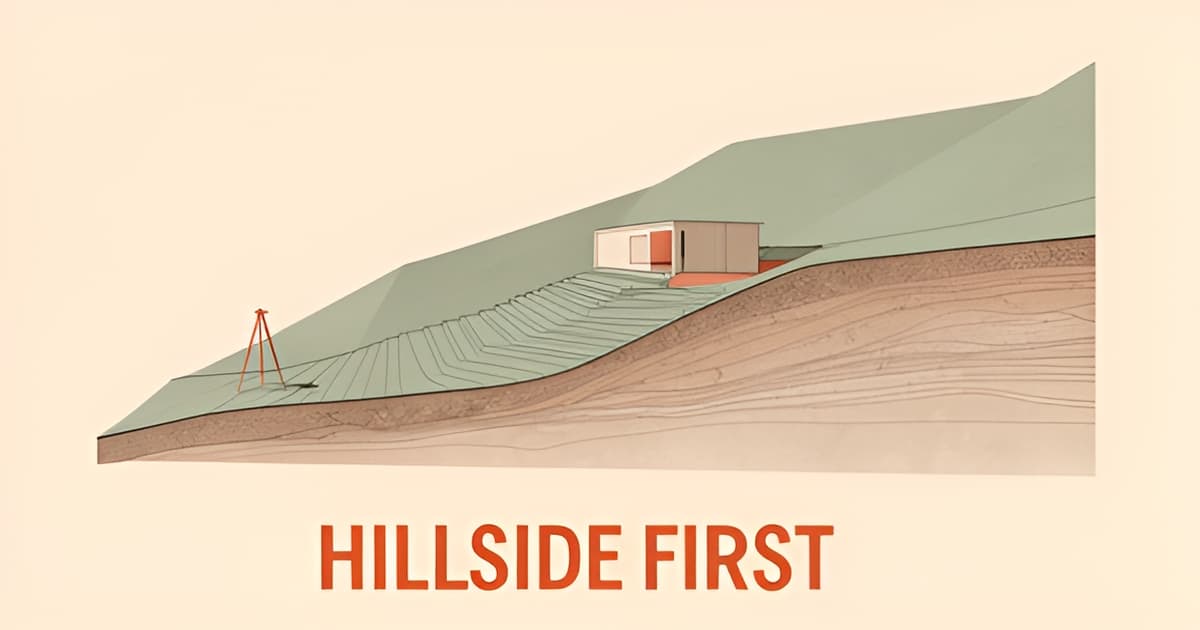
Geotechnical Report for Hillside Lots: What Altadena Owners Need
Key Facts
- Altadena fire-rebuild hillside geotechnical reports typically cost $4,000–$10,000+ and take 2–6 weeks, per local rebuild cost data.
- Post-January 2025 emergency streamlining has generally not waived geotechnical review, since slope stability is a life-safety matter.
- Eaton Fire heat creates a hydrophobic soil layer that blocks infiltration, and some burned slopes never regain full infiltration ability.
- Ordering structural drawings before the geotech report is described as the single most common and costly hillside permitting error.
- Soils reports older than about 10 years are typically rejected, and a neighbor's report is rejected outright because soils vary block to block.
- Most LA hillside homes sit on deep foundations, with caissons tied by grade beams the most common system.
- Over-irrigated landscaping is cited as a leading cause of residential slope failures, since dry-stable slopes can fail when saturated.
Why Your Altadena Hillside Lot Needs a Geotech Report (And Why Old Ones Don't Count)
On an Altadena hillside lot, the geotechnical report isn't a nice-to-have study — it's the gate between you and your building permit. If your lot slopes, sits in a mapped hazard zone, or burned in the Eaton Fire, plan check won't move forward without one.
The triggers are straightforward. According to LA-area permit guidance, a report is typically required for hillside grading above code thresholds, new construction or additions in designated Hillside Areas, parcels in mapped landslide or liquefaction zones under California's Seismic Hazards Mapping Act, and retaining walls holding more than roughly 4 feet of unbalanced fill. Grading permits also kick in for cut/fill slopes over 5 feet high or steeper than 2:1, per hillside construction analysis.
Altadena's terrain stacks several of these triggers at once. Many lots sit on or near slopes, drawing stricter review under hillside ordinances and state-mapped hazard zones, as noted in local rebuild guidance. Expect a fire-rebuild hillside report to run $4,000–$10,000+ and take 2–6 weeks — longer in mapped landslide or liquefaction zones.
Why old reports get rejected
That pre-fire report in your escrow file? It almost certainly no longer describes your lot. Reports older than about 10 years, or predating current code, are typically not accepted as-is. A neighbor's report is rejected outright because soil conditions vary across a single city block.
The Eaton Fire made things worse. Heat breaks down clay minerals, burns organic matter, and creates a hydrophobic soil layer that blocks infiltration — a key driver of the flash flooding Altadena saw after the fire. Changed drainage, vegetation loss, and debris-removal grading can alter slope conditions enough that reviewers expect entirely updated findings.
Streamlining has not waived geotechnical review. Even under post-January 2025 emergency executive orders, permit expediters note that grading and geotechnical review tied to slope stability is fundamentally a life-safety matter — and it has generally not been part of what streamlining provisions waive. Expanded rebuilds exceeding prior floor area, height, or footprint are treated as new hillside construction, triggering full Baseline Hillside Ordinance standards.
Sequencing is where owners lose money. The report must be commissioned before your structural engineer finalizes foundation drawings — ordering drawings first is described as the single most common and costly error, forcing redesigns when soils findings require a different foundation type.
One practical note for unincorporated Altadena: LA County Public Works handles your review, not LADBS, and the two hillside processes are not interchangeable. Confirming jurisdiction is step one — something we help owners sort out at Altadena ADU Builder before any money goes toward drawings.
What the Report Tests and What It Costs in Altadena
A geotechnical report isn't a box to check — it's the gate between you and your building permit, and on an Altadena hillside lot, it's the document every other design decision rests on. Here's what actually goes into one and what you should expect to pay.
Every hillside report must include five minimum components, according to slope stability guidance from a licensed PE: subsurface exploration, laboratory testing, groundwater characterization, slope stability analysis, and written recommendations covering setbacks, slope angles, drainage, and stabilization. In practice, that means 2–3 borings drilled deep enough to extend below the deepest potential failure surface — often 20 to 50 feet or more below the slope face — plus lab testing of density, strength, plasticity, expansion, and corrosion characteristics.
"Groundwater is the single biggest variable in slope stability. A slope that is stable when dry can fail when saturated." — Reco Prianto, PE, Calichi Design Group
The recommendations section is where the money gets decided. Findings directly determine whether you build a conventional slab-on-grade, a post-tension slab for expansive soils, or a pier-and-grade-beam system with caissons — the most common foundation for LA hillside homes. Because post-tension and deep-foundation systems cost more, the report can shift your construction budget before framing drawings are finalized.
Why fire-changed soils demand fresh findings
If your lot burned in the Eaton Fire, don't reach for a pre-fire report — even one that's technically current. Wildfire changes soil chemically and physically: heat breaks down clay minerals, burns off organic matter, and creates a hydrophobic layer that prevents water infiltration, driving runoff, flash floods, and debris flows. In Altadena, post-fire geotechnical reports confirmed weaker near-surface layers, and the California Geological Survey indicates burned soils may take years to recover their structure — some slopes never regain full infiltration ability.
Add changed drainage, vegetation loss, and debris-removal grading, and the ground itself has changed enough that reviewers expect updated findings. Notably, post-January 2025 emergency streamlining has generally not waived geotechnical review — slope stability is treated as a life-safety matter.
What it costs and how long it takes
For fire-rebuild hillside lots in Altadena, current cost guidance puts reports at $4,000–$10,000+ with 2–6 week timelines — longer if your parcel sits in a mapped landslide or liquefaction zone. Two surcharges can push the total higher:
- Rush or expedited service: +20–40% of the study cost
- Difficult-access drill rig mobilization: +15–20% of the total
- Additional borings, slope stability modeling, or groundwater/seepage analysis beyond standard scope
For an ADU on a gentler lot, the picture is friendlier: Southern California ADU reports typically run $800–$3,000. At Altadena ADU Builder, we walk homeowners through these numbers during a free ADU feasibility consultation, including a cost-quiz concept render, so you know what your specific lot will demand before committing to drawings.
One sequencing rule above all: commission the report before your structural engineer finalizes foundation drawings. Ordering structural drawings first is the single most common and costly error on hillside projects, forcing redesigns when the soils findings require a different foundation type. A quality report may cost a few thousand dollars, but it can save you millions in the long run.
How Report Findings Reshape Your Foundation, Grading, and Budget
The geotechnical report is not just a permit hurdle — it is the document that decides what your foundation looks like, how much dirt moves, and what your project ultimately costs. On an Altadena hillside lot, most homes end up on deep foundations, with caissons tied together with grade beams being the most common system for LA hillside construction. Mat or conventional slab foundations only work on flat, stable, benched lots.
The report's findings drive that choice directly. Conventional slab-on-grade suits stable, non-expansive soils; post-tension slabs are specified for expansive clay; and pier-and-grade-beam systems are recommended where bearing is poor or variable. Because post-tension and deep-foundation systems generally cost more, the soils report can change your construction budget before drawings are even finalized, as noted in permit guidance for LA hillside projects. Without verified soil data, engineers are guessing — which leads either to over-engineering that is costly or under-engineering that is dangerous, according to Southern California geotechnical practitioners.
The same findings shape everything around the structure:
- Retaining walls are treated as part of the foundation and must be structurally integrated, with backdrains, gravel, filter fabric, weep holes, and waterproofing behind them — walls holding more than about 4 feet of unbalanced fill generally require geotechnical input.
- Slope setbacks follow CBC 1808.7, which governs foundation distances from the slope toe and crest; setbacks typically range from one-third to one-half of slope height, with 5–15 foot minimums depending on jurisdiction.
- Grading constraints — maximum slope angles, keyways, benching, and subdrain requirements — all come straight from the report's recommendations.
- Drainage design must route runoff to the street or an approved outfall, never a neighbor's lot, and reviewers evaluate stormwater and erosion patterns before approving design.
Water deserves special attention. "Groundwater is the single biggest variable in slope stability. A slope that is stable when dry can fail when saturated," explains Reco Prianto, PE, of Calichi Design Group, who calls keeping water away from slopes the single most important grading decision. Over-irrigated landscaping is cited as a leading cause of residential slope failures.
The budget impact compounds quickly. Retaining walls run $40–$120 per square foot of face, subdrain systems $30–$60 per linear foot, and over-excavation with recompaction $15–$30 per cubic yard, per slope-stability engineering analysis. "A site that looks attractive on a topo map can become economically infeasible when the slope stability requirements are understood," Prianto warns.
This is why sequencing matters: commission the report before structural drawings begin, because calculations must be sized to the geotechnical findings. For Altadena owners — whether planning a fire rebuild or a hillside ADU — understanding these cost implications early is exactly what a feasibility review should surface before you commit to a design.
ctaText: Get a free ADU feasibility consultation — including a cost-quiz concept render — tailored to your Altadena lot.
socialProofText: Guidance from Altadena ADU Builder, with local rebuild experience from licensed general contractor JMB Builders LLC (CSLB #1103479).
The Right Sequence: Report First, Drawings Second, Jurisdiction Confirmed Always
On a hillside lot, the order in which you hire your consultants can cost you thousands of dollars. Multiple industry sources identify the same mistake again and again: commissioning structural drawings before the geotechnical report — described as "the single most common and costly error" in hillside permitting.
The logic is simple. The geotechnical report determines your foundation type — conventional slab-on-grade, post-tension slab for expansive soils, or caissons with grade beams, which are the most common system on LA-area hillside homes. Structural calculations must be sized to the report's findings, and incomplete geotechnical documentation is among the most common causes of correction cycles on hillside submittals, according to hillside permitting guidance. If your engineer draws a slab-on-grade foundation and the report calls for deep foundations, you pay for a redesign.
For an Altadena fire rebuild, budget $4,000–$10,000+ and expect a 2–6 week turnaround for a hillside geotechnical report, per local cost data. For ADU projects specifically, Southern California reports typically run $800–$3,000. Build that timeline into your schedule before any drawing work begins.
The correct sequence looks like this:
- Confirm your jurisdiction and report requirements for your specific parcel.
- Commission the geotechnical report and allow 2–6 weeks for hillside or fire-rebuild lots.
- Have your structural engineer size foundations, retaining walls, and grading plans to the report's recommendations.
- Submit for plan check with the report incorporated into the official plan set.
Jurisdiction is the step Altadena owners most often get wrong. Altadena is unincorporated Los Angeles County, which means LA County Public Works reviews your project — not LADBS. City and County hillside review processes are not interchangeable, and thresholds you read online for City of LA projects (such as the 33% slope trigger enforced by LADBS) may not match the County's requirements. Confirming which agency governs your lot is the first step in the entire process, and it is one we verify for homeowners at the start of every Altadena ADU Builder feasibility consultation.
Two more sequencing realities deserve attention. First, post-Eaton Fire streamlining has generally not waived geotechnical review — slope stability is treated as a life-safety matter that emergency provisions don't excuse. Second, the report doesn't end at plan approval: if soil conditions differ during excavation, the geotechnical engineer may issue revised recommendations, and a final letter of compliance is often required before the Certificate of Occupancy is issued. Keep your geotechnical engineer engaged through construction, not just through permitting.
One caution on shortcuts: reports older than about 10 years are typically not accepted as-is, and a neighbor's report will be rejected outright because soil conditions vary across a single city block. On a fire-rebuild lot, even a pre-fire report is likely invalid — changed drainage, vegetation loss, and debris-removal grading have altered the ground itself. Plan for a fresh report, sequenced first, and the rest of your permit path becomes dramatically smoother.
ctaText: Get a free ADU feasibility consultation — we'll confirm your jurisdiction, geotech requirements, and realistic costs for your Altadena lot, plus a concept render from our cost quiz.
socialProofText: Altadena's independent ADU guide — local permit knowledge for unincorporated LA County lots, featuring licensed builder JMB Builders LLC (CSLB #1103479).
Drainage, Water Management, and Next Steps for Your Hillside Build
If there's one force that decides whether your hillside foundation lasts decades or fails early, it's water. Engineers consistently identify it as one of the leading causes of slope failure and retaining wall distress — through hydrostatic pressure building behind inadequately drained walls, saturated soil losing its shear strength, or erosion quietly undermining footings (Ocean Permits). "A slope that is stable when dry can fail when saturated," as one licensed PE puts it (Calichi Design Group).
That's why your geotechnical report's drainage recommendations deserve as much attention as its foundation specs. On hillside lots, those typically include:
- Backdrains and subdrain systems behind retaining walls, typically running $30–$60 per linear foot
- Weep holes, gravel backfill, and filter fabric so hydrostatic pressure never accumulates
- Runoff routed to the street or an approved outfall — never onto a neighbor's lot, since LADBS and County reviewers examine all drainage plans
- Erosion control measures shaped by the report's slope stability modeling
Landscaping choices matter just as much as engineered drainage. Over-irrigated landscaping is cited as a leading cause of residential slope failures, and the simplest grading-design rule is to keep water away from the slope entirely (Calichi). For Eaton Fire rebuild lots, this is even more urgent: burned soils can develop a hydrophobic layer that blocks infiltration, triggering the flash floods Altadena has already seen, and some burned slopes may never fully regain their infiltration capacity (Marshall Geotechnical).
The takeaway for Altadena owners — whether you're planning an Eaton Fire rebuild or adding a hillside ADU — is to stay feasibility-first. Commission the geotechnical report before structural drawings, since findings can shift your foundation from slab-on-grade to caissons and grade beams and reshape your budget before framing drawings are finalized. For ADU-specific projects in Southern California, soils reports typically run $800–$3,000, a small investment compared with repairing a foundation built on guesswork (JMB Builders).
At Altadena ADU Builder, we recommend starting with a free ADU feasibility consultation — including a cost-quiz concept render — so you understand what your specific lot can support before committing to design fees. And if you bring on a contractor, verify licensure carefully; any builder you consider, such as JMB Builders LLC (CSLB #1103479, a paid featured listing on this site), should be able to show how they sequence geotechnical findings into grading, drainage, and foundation design. On an Altadena hillside lot, the ground decides what you can build — the smartest projects start by listening to it.
Frequently Asked Questions
Do I really need a new geotechnical report if I already have one from before the Eaton Fire?
How much does a geotechnical report cost for a hillside rebuild in Altadena?
Can I order my structural drawings first and get the geotech report later to save time?
Does the post-fire streamlining or emergency executive order waive the geotech requirement?
Which agency reviews my permit — LADBS or LA County?
What happens if the report finds bad soil — will I need a special foundation?
The Ground Decides First — Build Around It
On an Altadena hillside lot, the geotechnical report isn't paperwork — it's the gate between you and your permit, and the document that determines your foundation type, grading plan, drainage design, and ultimately your budget. The takeaways are clear: commission the report before structural drawings, don't rely on a pre-fire or decade-old report, confirm that LA County Public Works (not LADBS) governs your parcel, and keep water away from your slopes from day one. For fire-rebuild hillside lots, expect a report to run $4,000–$10,000+ with a 2–6 week timeline, while ADU soils reports in Southern California typically run $800–$3,000 — a small price compared with repairing a foundation built on guesswork. The smartest path is feasibility-first: know what your lot can support before you spend a dollar on design. At Altadena ADU Builder, we help homeowners confirm jurisdiction, geotech requirements, and realistic costs up front, with guidance rooted in local rebuild experience from licensed contractor JMB Builders LLC (CSLB #1103479). Start with a free ADU feasibility consultation — including a cost-quiz concept render — and let the ground tell you what to build before you commit to drawings.