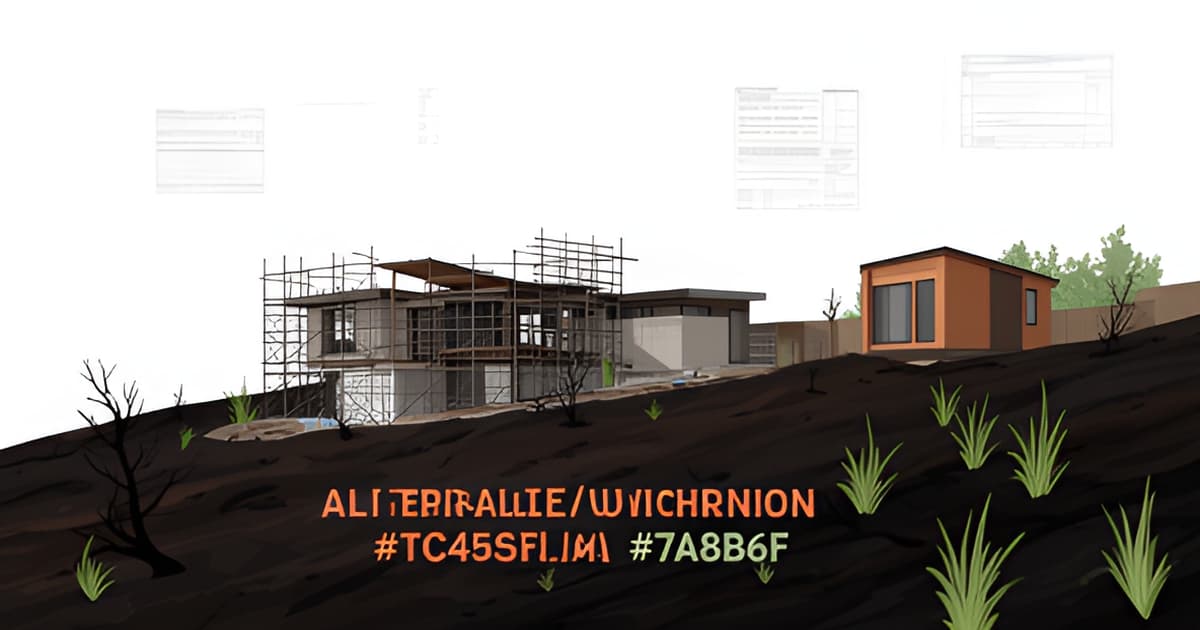
Eaton Fire Rebuild: Cost, Codes, and County Requirements
Key Facts
- Only about 1% of the 6,746 homes destroyed by the Eaton Fire had been fully rebuilt 18 months later, LA Magazine reports
- 64% of Eaton Fire survivors were still displaced as of April 2026, barely down from 67% the previous September, per the Department of Angels survey
- 1,170 rebuilding permits had been issued in the Eaton burn scar by early January 2026, NBC Los Angeles found
- One Altadena homeowner fronted over $700,000 from retirement savings before his insurance paid out, he told NBC Los Angeles
- Executive Order N-29-25 suspends rooftop solar and battery storage requirements plus the 2025 Building Standards Code for Eaton rebuilds, per LA County's rebuild policies
- Edison is automatically deemed 'prudent' under a 2019 law unless negligence is proven, with the first jury trial set for January 25, 2027, the LA Times investigation found
- Altadena JADUs are capped at 500 square feet within the main home and need their own exterior access, according to County rules
The Rebuild Reality: Where Altadena Stands 18 Months After the Eaton Fire
Eighteen months after the Eaton Fire tore through Altadena, the rebuild is moving — but barely. If you're standing where your house used to be, the numbers tell you exactly what to expect.
The Eaton Fire destroyed 6,746 units, yet only about 1% of those homes have been fully rebuilt. The first certificate of occupancy wasn't issued until December 2025 — roughly 12 months after the fire — and only about 100 more homes followed in the six months after that. Meanwhile, 64% of Eaton Fire survivors were still displaced as of April 2026, a figure that has barely budged from 67% the previous September.
The encouraging news sits in the permitting pipeline. As of early January 2026, 1,170 rebuilding permits had been issued and 1,425 properties had approved rebuilding plans in the burn scar area. That means hundreds of Altadena families are actively moving through design, permitting, and construction right now — even if finished homes remain rare.
Here's what the data so far shows about where things stand:
- 6,746 units destroyed; only ~1% fully rebuilt at the 18-month mark
- First certificate of occupancy issued ~12 months post-fire, in December 2025
- 1,170 permits issued and 1,425 plans approved by early January 2026
- 64% of survivors still displaced as of April 2026
The slow pace isn't unwillingness — it's cost, codes, and county process. One Altadena homeowner, Ted Koerner, fronted over $700,000 from his retirement fund to rebuild before his insurance paid out. On top of financing, rebuilders navigate LA County unincorporated-area requirements, Climate Zone 9 energy standards, and septic decisions — all of which add months before a single nail is driven.
Koerner's advice to fellow survivors: "Pick up the phone every day. Every day. Get up early." Persistent, direct engagement with the County was essential to his becoming one of the first families home. The Baileys, who lost their home of 41 years, put it more gently: "It's a slow process, and you have to have the faith that everybody has genuine interest at heart."
That's the same philosophy behind Altadena ADU Builder's approach to backyard projects here in unincorporated LA County — understand the real requirements early, then work them relentlessly. If you're weighing a rebuild, an ADU on your rebuilt lot, or a garage conversion while you wait, start with a free ADU feasibility consultation that includes a cost quiz and a concept render of what your property could hold. No guarantees on permits or timelines — just a clear-eyed look at what your lot allows and what it costs.
What EO N-29-25 Actually Suspends: The County Relief Measures That Cut Rebuild Cost and Complexity
Rebuilding after the Eaton Fire is expensive enough without paying for code requirements the County has officially suspended — yet many Altadena homeowners don't realize how much relief is already on the table. Executive Order N-29-25 is the centerpiece, and it removes two of the costliest mandates a new build normally faces.
Under the County's rebuild policies, EO N-29-25 suspends the rooftop solar and battery storage installation requirements and the 2025 California Building Standards Code for Eaton and Palisades rebuilds. For a household already stretching to cover construction costs — one Altadena homeowner reported fronting over $700,000 from retirement funds before insurance paid out — skipping a mandated solar array and battery bank is real money.
The relief extends well beyond solar. Building Code Section 110.2.3.6 allows "in-kind" rebuilding in geotechnical hazard areas, meaning eligible properties in landslide-prone zones can rebuild substantially as they were, rather than funding extensive geotechnical mitigation. That single provision can decide whether a hillside lot is financially viable at all.
A few more suspensions and pathways materially cut both cost and complexity:
- Fireplaces: under AQMD Rule 445, disaster-damaged properties may replace wood-burning fireplaces one-to-one — normally prohibited in new construction.
- Drainage (LID): Low Impact Development rules apply only to rebuilds affecting more than 50% of existing impervious area, and only for residential buildings of four units or less.
- Septic: LA County Public Health offers a Covenant and Agreement pathway allowing a conventional septic system (tank plus structurally sound converted cesspool seepage pits) without a tested 100% future expansion area. Owners complete and notarize the covenant, record it with the Registrar-Recorder/County Clerk, and provide a copy to Public Health before final approval. Contact DPH land use at (626) 430-5380 or [email protected].
Note that septic relief is not automatic: properties adding bedrooms or increasing house size must still upgrade onsite wastewater systems, and skipping the covenant steps risks project delays, regulatory violations, and costly upgrades.
What still applies matters just as much. Altadena's zip codes 91001 and 91003 fall under Climate Zone 9 energy standards, which govern envelope and window/door efficiency under the California Energy Code. Your architect or builder should design to Zone 9 from day one — including any attached JADU, which the County caps at 500 square feet within the main home with its own exterior access. Local guides like Altadena ADU Builder track these unincorporated-area specifics because they differ from what Pasadena or LA City rebuilders face.
One planning item that pays for itself: Southern California Edison plans to underground power lines in parts of LA County, and the County advises that preparing now — especially when replacing or adding electrical panels — "can save you significant time and expense once SCE begins undergrounding in your area."
If you're weighing a rebuild plus an ADU on your Altadena lot, a free ADU feasibility consultation with a cost-quiz concept render can show what fits your parcel under these exact rules.
The Money Problem: Fronting Rebuild Costs, Insurance Gaps, and the Edison Liability Wildcard
Rebuilding after the Eaton Fire is as much a financing problem as a permitting one — and for many Altadena families, the money runs out long before the county signs off. The most sobering example: one homeowner, Ted Koerner, fronted more than $700,000 from his retirement fund to rebuild before his insurance ever paid out.
That gap between what insurance covers, what lenders will advance, and what contractors need up front is why so many survivors stay displaced. Two-thirds of Eaton Fire survivors remained displaced as of April 2026 — a rate that dropped just three percentage points in seven months.
Nonprofit pathways are filling the gap where insurance and savings fall short. In one documented case, the Greenline Housing Foundation purchased a survivor's destroyed studio property for $475,000, intending to resell it back to her for less once redevelopment is complete, as reported by NBC Los Angeles. For homeowners weighing whether to rebuild, sell, or finance an income-producing ADU alongside the main house, these creative structures matter.
Then there's the Edison question — the financial wildcard hanging over every rebuild decision:
- Investigators determined the Eaton Fire was caused by electrical arcing on an out-of-service SCE transmission line, and Edison was cited for eight violations.
- Under a 2019 state law, Edison is automatically deemed to have acted "prudently" because regulators approved its wildfire prevention plan — meaning it will be fully reimbursed for billions in damages from a state fund unless negligence is proven.
- The first negligence jury trial is scheduled for January 25, 2027, per the LA Times investigation.
In practical terms, that means survivors shouldn't build their financing plan around an assumed Edison payout. The liability picture could shift after the 2027 trial, but rebuild timelines won't wait.
One honest caveat: the available sources don't provide per-square-foot rebuild cost data for the Eaton burn scar. The only hard numbers are anecdotal — the $700,000 out-of-pocket example and the $475,000 property purchase. Treat any contractor's per-square-foot estimate as a starting point for negotiation, not a verified market rate.
If you're weighing how an ADU or JADU could generate rental income to ease your rebuild math, Altadena ADU Builder offers a free ADU feasibility consultation with a cost-quiz concept render. Our featured builder, JMB Builders LLC (CSLB #1103479) — an Altadena-based licensed general contractor whose Eaton Fire rebuild work is documented on jmb-builders.com — can help you scope real numbers for your lot. No permit or timeline guarantees, just grounded local guidance.
Rebuilding With an ADU or JADU: What Altadena's County Rules Allow
Rebuilding after the Eaton Fire presents a rare window: the house is already coming down to studs, so adding a Junior Accessory Dwelling Unit (JADU) or full ADU costs far less than retrofitting later. With two-thirds of survivors still displaced as of April 2026, on-site housing isn't a luxury — it's a practical way to keep family close while offsetting rebuild costs with rental income.
Altadena sits in unincorporated LA County, and the County's rebuild guidance sets clear parameters. A JADU is capped at 500 square feet, must be created within the walls of the main home, and needs its own exterior access — no separate entrance fee, no new foundation, per the County's rebuild policies page. That makes it one of the cheapest ways to add a legal dwelling during reconstruction.
A detached ADU follows different rules but pairs naturally with a rebuild, since mobilization costs, grading, and utility trenching are already in play. Either way, the energy envelope matters: Altadena's zip codes (91001, 91003) fall under Climate Zone 9, which sets the envelope and fenestration efficiency standards your ADU plans must meet.
- Septic capacity — adding bedrooms or square footage on cesspool properties may trigger an onsite wastewater upgrade, though LA County Health offers a Covenant and Agreement pathway to avoid the full expansion-area requirement.
- SCE undergrounding — Edison plans to underground lines in parts of the County; the County advises that preparing now "can save you significant time and expense" once undergrounding begins, so coordinate panel and service placement early.
- Noise restrictions — construction noise is prohibited Monday–Saturday from 8 PM to 7 AM, and on Sundays and holidays from 7 PM to 7 AM.
The rebuild math is sobering. One Altadena homeowner fronted over $700,000 from retirement savings before insurance paid out. An ADU that houses relatives — or rents to another returning Altadenan — can meaningfully shift that equation. Given that only about 1% of destroyed homes had been rebuilt 18 months post-fire, every decision that adds long-term value deserves a hard look during design.
Altadena ADU Builder offers a free ADU feasibility consultation with a cost-quiz concept render, specific to Altadena's County rules — a useful first step before your architect finalizes plans. If you prefer a builder already doing this work, JMB Builders LLC (CSLB #1103479), an Altadena-based licensed general contractor featured on this site, handles custom homes, ADUs, and Eaton Fire rebuilds.
Your Rebuild Action Plan: Sequence, Pitfalls, and When to Bring In a Builder
The first rebuilt Eaton Fire home didn't receive its certificate of occupancy until December 2025 — roughly a year after the fire — and only about 100 more followed in the next six months, per LA Magazine's reporting on County permit data. The survivors who move fastest tend to work the system deliberately, in a specific order.
Start by confirming which County relief measures apply to your property. Executive Order N-29-25 suspends the rooftop solar and battery storage requirements and the 2025 Building Standards Code for Eaton rebuilds, and "in-kind" rebuilding is allowed in geotechnical hazard areas — but only if you claim them correctly on your plans. The County's rebuild policies page is the definitive reference.
Next, handle septic paperwork before final approval, not after. If your property uses a cesspool and you're adding bedrooms or square footage, the Covenant and Agreement pathway lets you keep a conventional system — but you must complete, notarize, and record the covenant with the Registrar-Recorder/County Clerk and provide a copy to Public Health. Skip this step and you risk project delays, regulatory violations, and costly system upgrades — the County's own words. Public Health's land use line is (626) 430-5380.
Your sequence should look like this:
- Verify County relief eligibility (EO N-29-25, in-kind rebuild, AQMD Rule 445 fireplace replacement) before plans are drawn.
- Record the septic covenant with the County Clerk and deliver a copy to Public Health before final approval.
- Prep for SCE undergrounding now — the County warns that preparing in advance "can save you significant time and expense" once undergrounding reaches your area.
- Engage the County persistently. Ted Koerner, whose home got the first certificate of occupancy, credits daily phone calls: "Pick up the phone every day."
That last point deserves emphasis. Koerner told NBC Los Angeles he fronted over $700,000 from retirement funds before insurance paid out — persistence was the only lever he had.
A builder earns their fee in this phase, not just in framing. A good one sequences covenant recording, SCE coordination, and Climate Zone 9 energy compliance into the plan set from day one. If you're weighing an ADU or JADU as part of your rebuild — County rules cap JADUs at 500 sq ft within the main home — Altadena ADU Builder offers a free feasibility consultation with a cost-quiz concept render to scope it before you commit.
Disclosure: our featured builder is JMB Builders LLC (CSLB #1103479), an Altadena-based licensed general contractor that handles custom homes, ADUs, and Eaton Fire rebuilds, documented at jmb-builders.com. This is a paid placement; we make no permit or timeline guarantees.
Frequently Asked Questions
How many Eaton Fire homes have actually been rebuilt so far?
What code requirements does Executive Order N-29-25 actually suspend for Altadena rebuilds?
How much does it cost to rebuild after the Eaton Fire, and will insurance cover it up front?
Can I add a JADU or ADU while rebuilding my Altadena home?
What do I need to do about my septic system if my Altadena property is on a cesspool?
What's the best way to speed up my rebuild through LA County?
The Window Is Open Now — Rebuild Smarter While the Rules Are on Your Side
Eighteen months after the Eaton Fire, the picture is clear: only about 1% of destroyed Altadena homes have been rebuilt, and 64% of survivors remain displaced — yet 1,170 rebuilding permits are already in motion, per LA Magazine's County permit data. The families moving fastest aren't the luckiest — they're the ones who claimed their EO N-29-25 relief early, recorded their septic covenant before final approval, prepped for SCE undergrounding, and called the County every day. If you're rebuilding on an unincorporated LA County lot, this is also the cheapest moment to add an ADU or a 500-square-foot JADU: mobilization, grading, and utilities are already paid for. Altadena ADU Builder exists to help you see those numbers before your architect finalizes plans — no guarantees, just grounded local guidance. Request a free ADU feasibility consultation with a cost-quiz concept render, and take the first concrete step toward getting your family back on your lot.