Altadena Custom Home Builders: What Separates Real Custom Firms from Spec Builders
Key Facts
- The litmus test for a true custom builder is simple: who controls design decisions before construction begins, per Realtor.com
- Spec homes close in 30–90 days, while custom builds typically run 4–6 months, stretching to 12–24 months for complex projects, Realtor.com reports
- 37% of builders cut prices by an average of 5% in June 2025, and 62% offered incentives like rate buydowns, NAHB data shows
- A builder who gives a firm price without real plans and specifications 'is guessing,' industry guidance warns
- Checking a builder's license, insurance, and complaint history takes roughly 15 minutes and rules out a large share of bad options, practitioner guidance finds
- NAHB is blunt: don't hire anyone who says a contract 'won't be necessary,' and walk away from builders who can't provide references, per its consumer advice
- Spec builders buy materials in bulk — 'a builder might buy 50 identical bathtubs at once' — which is why major layout changes usually aren't possible, Realtor.com explains
The Problem: When a 'Custom' Builder Isn't Really Custom
Every Altadena homeowner shopping for a "custom home builder" runs into the same confusion: the term is used so loosely that a production builder with a catalog of floor plans and a true design-build firm can look identical on the surface. In practice, the industry recognizes three distinct tiers — tract or production builders, spec builders, and custom builders — and the differences run deeper than marketing language.
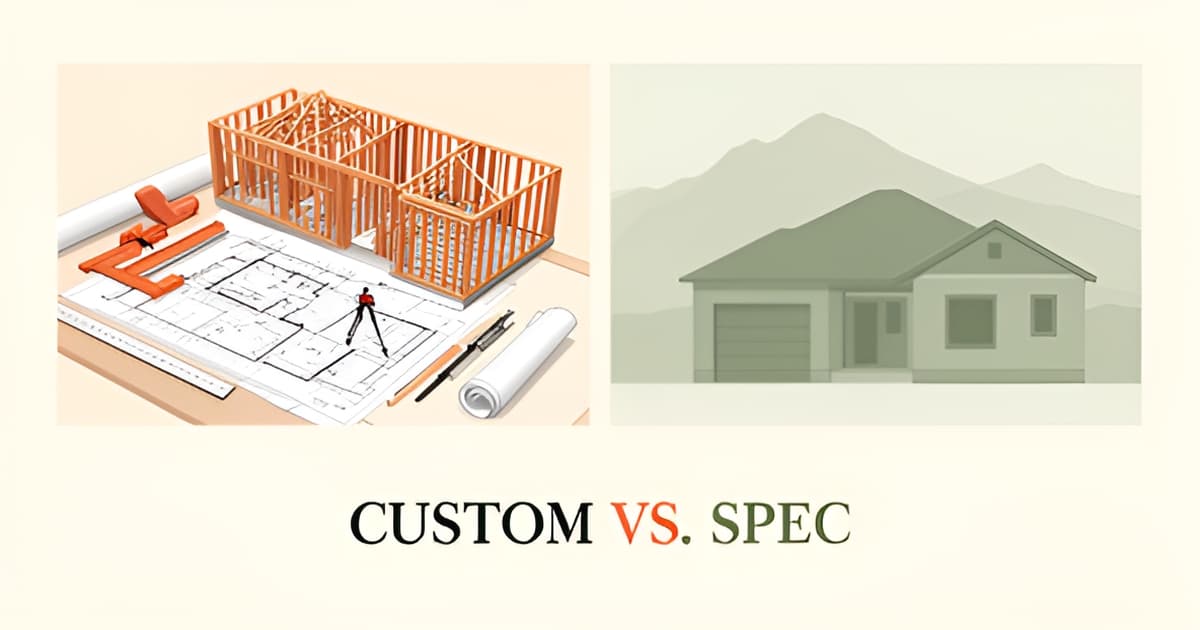
The litmus test is simple: who controls design decisions before construction begins? According to Realtor.com's breakdown of spec vs. fully custom homes, a spec home is built without a specific buyer in mind — the builder picks the floor plan and finishes, hoping to sell during or just after construction. A fully custom home, by contrast, is built for the buyer on land they own or purchase, with the buyer shaping every aspect alongside an architect and builder. Custom buyers control materials, features, styles, layout, location, and price, as one builder's comparison of the three tiers explains.
The structural differences between spec and custom operations are significant:
- Spec builders buy materials in bulk — as brokerage owner Andrew Fortune puts it, "a builder might buy 50 identical bathtubs at once" — while custom homes require unique, costlier-to-source items.
- Spec builders reuse the same floor plans across many homes, eliminating custom architectural drawings entirely.
- Spec buyers can typically choose minor upgrades like countertops or flooring early in construction, but major layout changes usually aren't possible.
- Custom pricing often runs on cost-plus contracts, whereas spec homes carry "a fixed price that rarely changes once you sign."
That last point about upgrades is a useful diagnostic for Altadena homeowners: if a firm calling itself custom tells you that moving a wall or reworking a floor plan isn't an option, you're likely talking to a semi-custom or spec shop wearing custom branding. It's also worth knowing that the categories blur in both directions — some self-described custom builders also build select spec homes, so a company's website label isn't a guarantee of how any single project will run.
The stakes are real in a market like Altadena, where lot values are high and rebuild work — including Eaton Fire reconstruction — demands site-specific design rather than a repeated template. At Altadena ADU Builder, we see the same labeling problem in the ADU space, which is why our guides push homeowners to ask process questions before signing anything.
The takeaway: "custom" is a claim, not a credential. The builder's answer to who holds the pencil during design — and whether real plans and specifications exist before a price is quoted — tells you which category you're actually dealing with.
The Five Signals That Separate Real Custom Firms from Spec Shops
A builder's sales pitch tells you what they want to be. Their paperwork tells you what they actually are. These five signals — drawn from industry vetting guidance — work on any builder in Altadena, whether you're planning a full custom home or a backyard ADU.
1. Contract structure and specification depth. Spec homes carry "a fixed price that rarely changes once you sign," while custom builders typically use cost-plus contracts with real plans behind them, according to Realtor.com's breakdown. The tell: a firm quote with no plans attached. As one industry guide puts it, a builder who gives you a firm price without plans "is guessing" — and a low number with thin specifications is a down payment on a larger number later. Demand a written list of what's included, down to the details.
2. Customization limits. Ask early whether major layout changes are possible. Spec operations buy materials in bulk — one builder describes firms that "might buy 50 identical bathtubs at once" — so structural changes usually aren't on the table. If you can swap countertops but not move a wall, you're looking at semi-custom, no matter what the brochure says.
3. Verifiable credentials. Checking a license, insurance, and complaint history takes roughly fifteen minutes, and that quick screen rules out a large share of bad options. In California, that means pulling the CSLB record — a firm like JMB Builders LLC (CSLB #1103479) publishes its number precisely so you can verify it. If a builder resists documentation requests, that itself is your answer.
4. Active job sites over finished models. A finished model home tells you almost nothing; an active job site tells you everything about how a builder actually works. Look for organized staging, protected materials, and a superintendent who can answer questions. Ask to meet the person who will actually run your project — the person who sells the house is often not the person who builds it.
5. References — the last three, not the favorite three. Ask for the builder's three most recent clients, ideally with homes completed within the past 12 months. Curated lists show you a builder's best day; recent clients show you their typical one. NAHB is blunt here: any quality builder should readily provide customer contacts, and if they cannot, consider it a red flag and walk away.
The NAHB and other vetting guides converge on the same immediate warning signs:
- Pressure to sign the same day — legitimate builders don't expire their quotes in 24 hours.
- No written contract. NAHB's guidance is direct: don't hire anyone who says a contract "won't be necessary."
- No references, or reluctance when you ask for recent ones.
One more pattern worth noting: three separate reviews describing the same complaint — slow communication, budget creep, missed dates — is a pattern, not a coincidence. Apply these five signals to any firm you meet in Altadena, and the spec shops marketing themselves as custom will stand out within the first conversation.
Timelines, Contracts, and Pricing: Setting Realistic Expectations
A builder who promises you a firm price before seeing plans is not being decisive — they're guessing. That single distinction explains most of the confusion Altadena homeowners face when comparing custom builders against spec operations.
The timelines look very different because the products are different. According to Realtor.com's comparison, spec "quick move-in" homes close in 30–90 days, while custom builds typically run 4–6 months, stretching to 12–24 months for complex projects. If a firm can hand you keys in six weeks, you're buying a house that was designed for the market, not for you.
Contracts behave differently too. Spec homes carry "a fixed price that rarely changes once you sign," while custom builders often use cost-plus structures where the final price can move with material costs and change orders. That variability isn't a flaw — industry guidance is blunt: "A real number needs real plans and specifications, and any builder who gives you a firm price without them is guessing."
Watch for these pricing tactics when evaluating any builder:
- A low base price that treats necessities — garage door openers, backsplashes — as paid upgrades; demand a detailed written list of included features.
- The claim "we never go over budget," which experienced builders describe as a sales line, not a commitment.
- Change orders settled "at the end" instead of written, priced, and signed before work proceeds.
The 2025 market adds useful context. NAHB data shows 37% of builders cut prices by an average of 5% in June 2025, and 62% offered incentives like rate buydowns and closing-cost cash. Those incentives flow toward spec inventory — homes builders need to move — not toward your custom project.
So when a genuine custom firm quotes a longer timeline, an open-book cost-plus contract, and no promises about permits or completion dates, that transparency is the feature, not the drawback. Altadena ADU Builder applies the same standard in our own guidance: no permit or timeline guarantees, just realistic numbers. If you're weighing a backyard ADU alongside a custom build, get a free ADU feasibility consultation with a cost-quiz concept render to see real costs and real permitting requirements before you commit to anything.
How to Vet an Altadena Builder: A Practical Action Plan
Vetting a builder takes about fifteen minutes of verification work, according to practitioner guidance — and that short investment rules out a large share of bad options before you ever sit through a sales pitch. Here is the action plan we recommend to Altadena homeowners, whether you're rebuilding after the Eaton Fire or planning a custom home or ADU.
Interview three builders — no more than five or six. Fewer limits your ability to compare pricing and process; more causes decision fatigue. Ask each candidate the same questions so answers are comparable, and be wary of anyone pressuring you to sign the same day.
Then verify credentials directly:
- Confirm the contractor's license and insurance through the state licensing board — a legitimate firm will provide its license number without hesitation.
- Tour an active job site, not a finished model. A finished model home tells you almost nothing; an active site shows you how a builder actually works day to day.
- Meet the actual project manager or superintendent. The person who sells you the house is often not the person who builds it — find out who is.
- Check references from homes completed in the past 12 months, and tour at least one home built five or more years ago to judge how the work has aged.
- Ask about subcontractor relationships. Long-term trade partners signal consistent quality and reliable scheduling more than years in business ever will.
Watch for the red flags the National Association of Home Builders flags outright: never hire anyone who says a contract "won't be necessary," and walk away from a builder who cannot produce names and phone numbers of satisfied customers. Vague timeline answers, annoyance at your questions, and a promise of the shortest schedule in the room are all warning signs.
Applying this checklist locally: one Altadena-based firm, JMB Builders LLC (CSLB #1103479), is a licensed general contractor building custom homes, ADUs, and whole-home remodels, including Eaton Fire rebuilds, with its work documented publicly at jmb-builders.com. A verifiable license number, a documented portfolio, and an Altadena-specific focus — regional expertise matters more than general experience — are exactly the signals the checklist asks you to confirm. Full disclosure: this featured placement is paid, and we encourage you to run JMB (or any builder) through the same verification steps yourself.
If you're weighing an ADU alongside a custom build, Altadena ADU Builder offers a free feasibility consultation with a cost-quiz concept render — real costs and real permits, with no timeline or permit guarantees, because a builder who promises both before plans exist is guessing.
ctaText: Get a free ADU feasibility consultation with a cost-quiz concept render
socialProofText: Altadena's independent guide to backyard ADUs — real costs, real permits, real builders.
Your Next Step: Free ADU Feasibility Consultation
The same test you just learned for custom homes applies directly to the backyard ADU you may be considering. A true custom ADU starts with your lot, your goals, and your design input — not a builder's stock floor plan hoping to match market trends. If a firm won't adapt the layout to your property, you're likely talking to a spec shop wearing a custom label.
The vetting signals carry over, too. Credential checks take roughly fifteen minutes and rule out a large share of bad options, according to builder guidance on vetting. And the NAHB's consumer advice is blunt: don't hire anyone who says a contract "won't be necessary." ADU projects attract the same sales tactics — firm prices without real plans, vague timelines, pressure to sign fast.
Here's the short version of what to demand from any Altadena ADU builder:
- A written contract with real plans and specifications behind every number — a firm price without them is a guess.
- A verifiable California contractor's license and insurance, checked before you sign anything.
- References from recent clients, ideally projects completed within the past twelve months.
- Honest timeline talk. Quick-move-in promises are a red flag; complex custom work realistically runs months to years, and builders who promise the shortest schedule in the room are usually selling.
- Regional expertise — an Altadena focus matters more than decades of experience somewhere else.
That last point is why Altadena ADU Builder exists. We're an independent local guide — not a builder — covering real costs, real permits, and real builders for accessory dwelling units in Altadena's unincorporated LA County area, from garage conversions to JADUs. We don't promise permits or timelines, because anyone who does is guessing. We tell you what the process actually involves.
Where do you start? With a free ADU feasibility consultation that includes a cost-quiz concept render for your property. It's an honest first look at what fits your lot and budget — no pressure, no guarantees, just local guidance grounded in how Altadena permitting and construction actually work.
One note on the builders we feature: our featured builder, JMB Builders LLC (CSLB #1103479), is a paid placement, disclosed openly. JMB is an Altadena-based licensed general contractor whose custom home, ADU, and Eaton Fire rebuild work is documented on its website — which is exactly the kind of verifiable track record this article's checklist asks you to look for.
Run every builder you interview through the five signals above, whether it's a full custom home or a 600-square-foot backyard unit. The builder who controls the design before you've agreed to it is telling you who the project is really for.
Frequently Asked Questions
How can I tell if an Altadena builder is really custom or just a spec builder with custom branding?
What's the biggest red flag when a builder quotes me a price?
How long should a custom home build actually take compared to a spec home?
Why do custom builders use cost-plus contracts instead of a fixed price — isn't that risky?
How do I vet a builder without spending weeks on research?
What warning signs should make me walk away from a builder immediately?
The Pencil Test: Your Final Checklist Before You Sign
Here's what to carry into every builder conversation in Altadena: "custom" is a claim, not a credential. The real test is who holds the pencil during design — a true custom firm builds around your lot, your goals, and your decisions, while a spec shop offers countertop swaps and calls it customization. Watch the five signals: cost-plus contracts backed by real plans, a verifiable CSLB license, active job sites instead of finished models, references from the last twelve months, and zero pressure to sign today. Remember that custom builds typically run 4–6 months, or 12–24 for complex projects — so a builder promising keys in six weeks is selling you someone else's house. The same test applies whether you're rebuilding after the Eaton Fire or adding a backyard ADU. If you're weighing an ADU, start with Altadena ADU Builder's free feasibility consultation and cost-quiz concept render — real costs, real permits, no guarantees we can't keep.